
MSc Final Project
Thryve
Design Brief
Designed a mobile app to support urban growers by addressing barriers to starting and maintaining urban food gardening. Conducted research with 50 participants, prioritised features which support behaviour change methods (Behaviour Change Wheel) and theories in Learning Design (Cognitive Theory of Multimedia Learning) while leveraging UX design practice (Double Diamond Design method).
25-35 year olds living in urban spaces who want to start urban food growing face many barriers in taking it up, in particular lack of access to garden space and knowledge gaps due to overwhelming information online.
Problem
A mobile application that supports users in starting their urban food growing journey by helping overcome these barriers.
Outcome
Discover
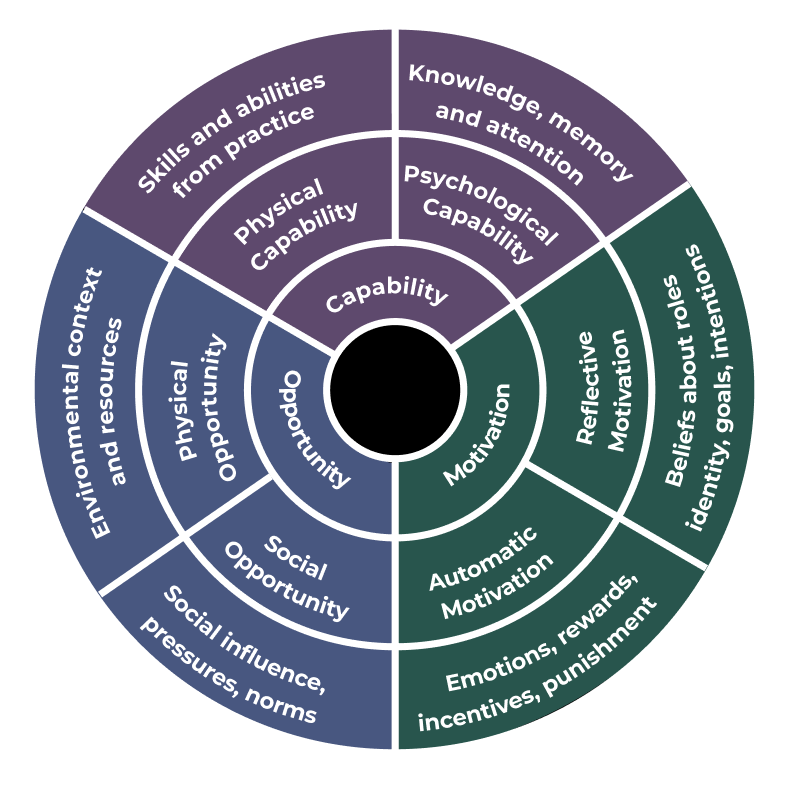
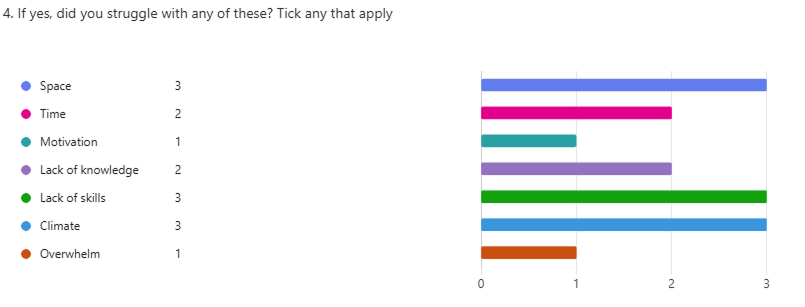
The secondary research showed that there are many barriers for urban growers. To understand the target user (25-35 year olds) better, I conducted primary research with 50 participants, following the Behaviour Change Wheel framework and COM-B Model. I used both quantitative and qualitative methods, and questions were informed by the COM-B model and supporting frameworks to gain insights into the perceptions of the target behaviour. The qualitative data was then organised into affinity maps to identify themes and turn data into insights. This identified some key barriers to overcome in order for the new behaviour to occur:
01
Lack of access to garden space
(physical opportunity)
02
Lack of knowledge + feelings of overwhelm
(psychological capability + automatic motivation)
03
Struggle to stick to
New habits
(psychological capability)
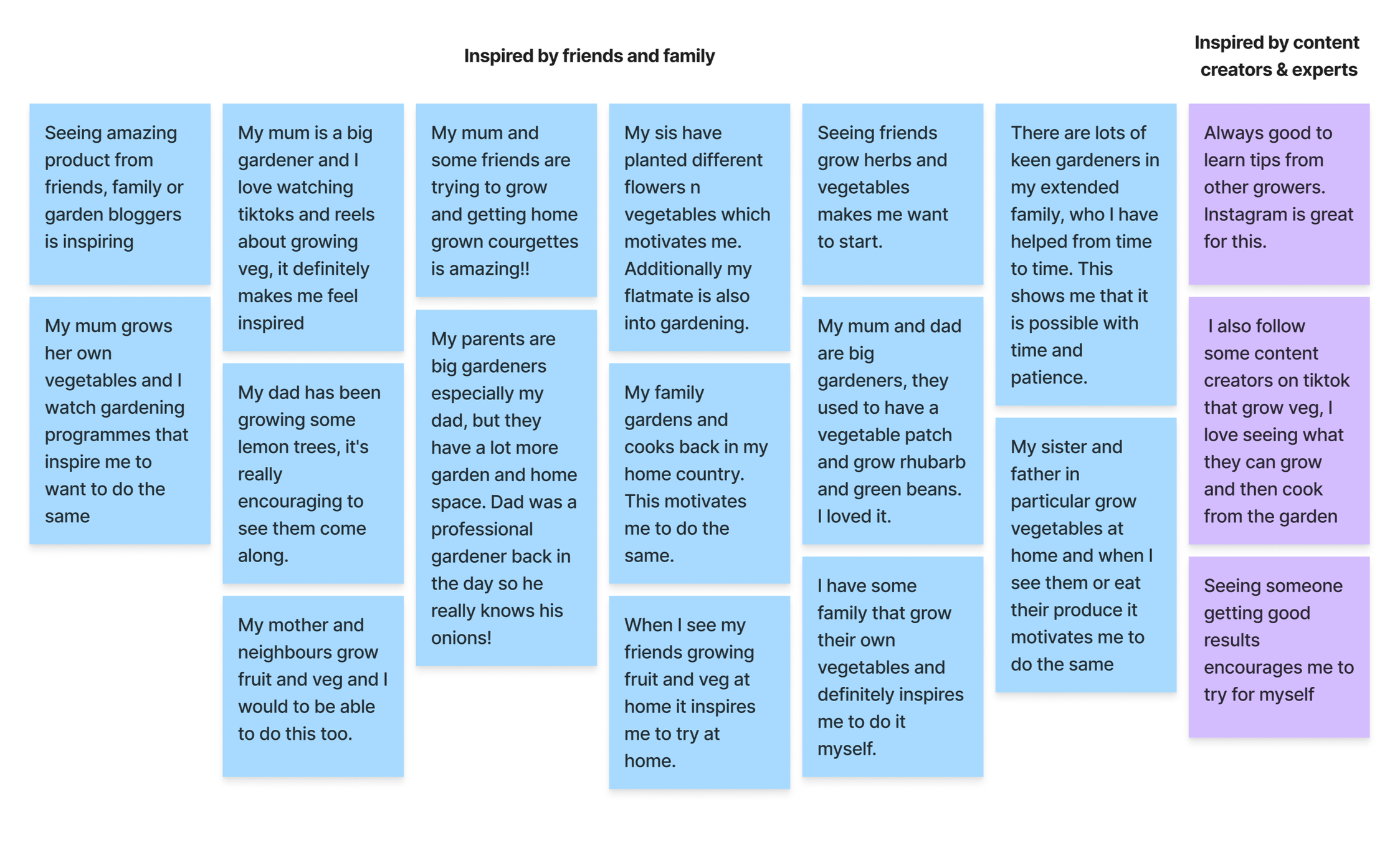
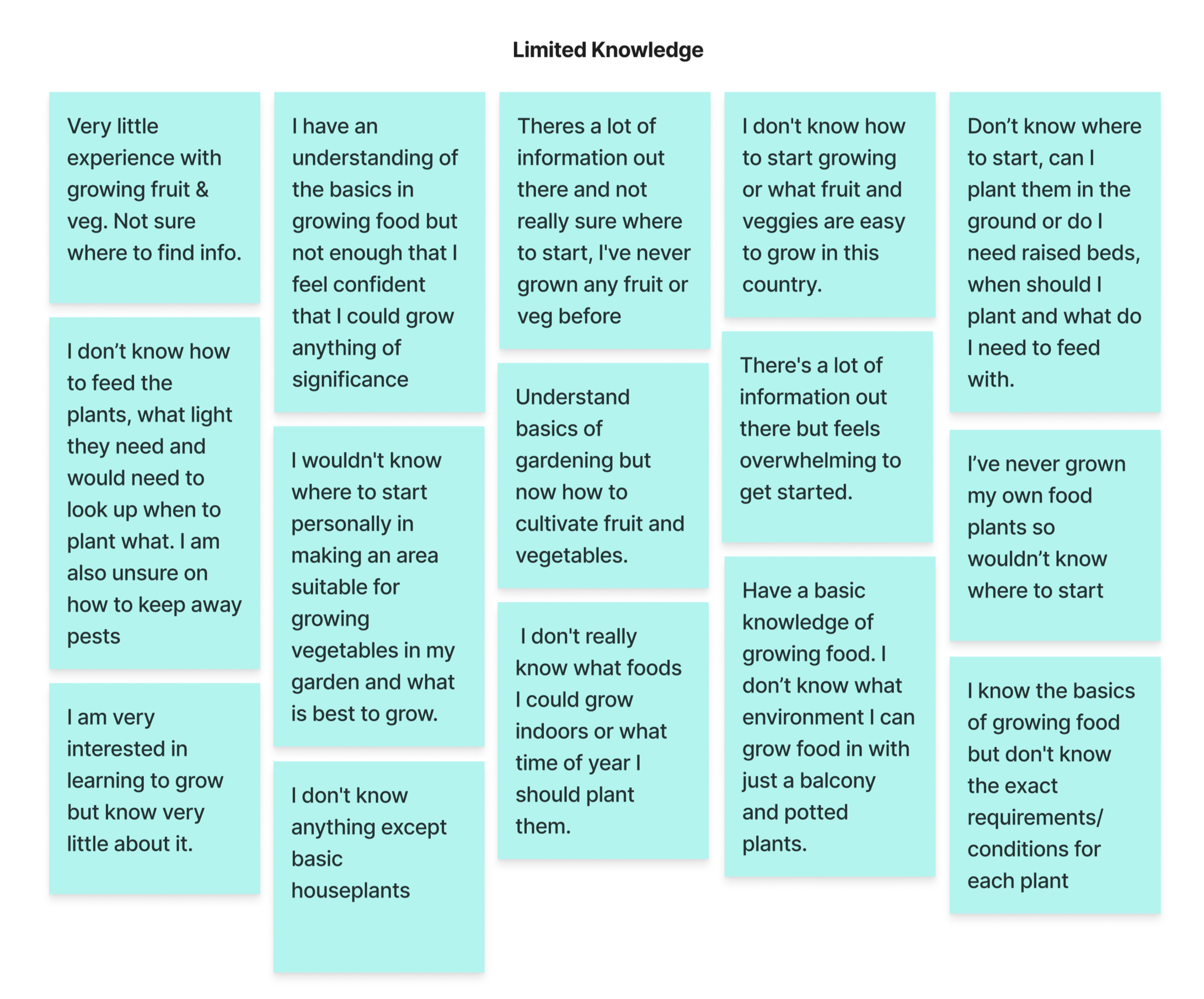
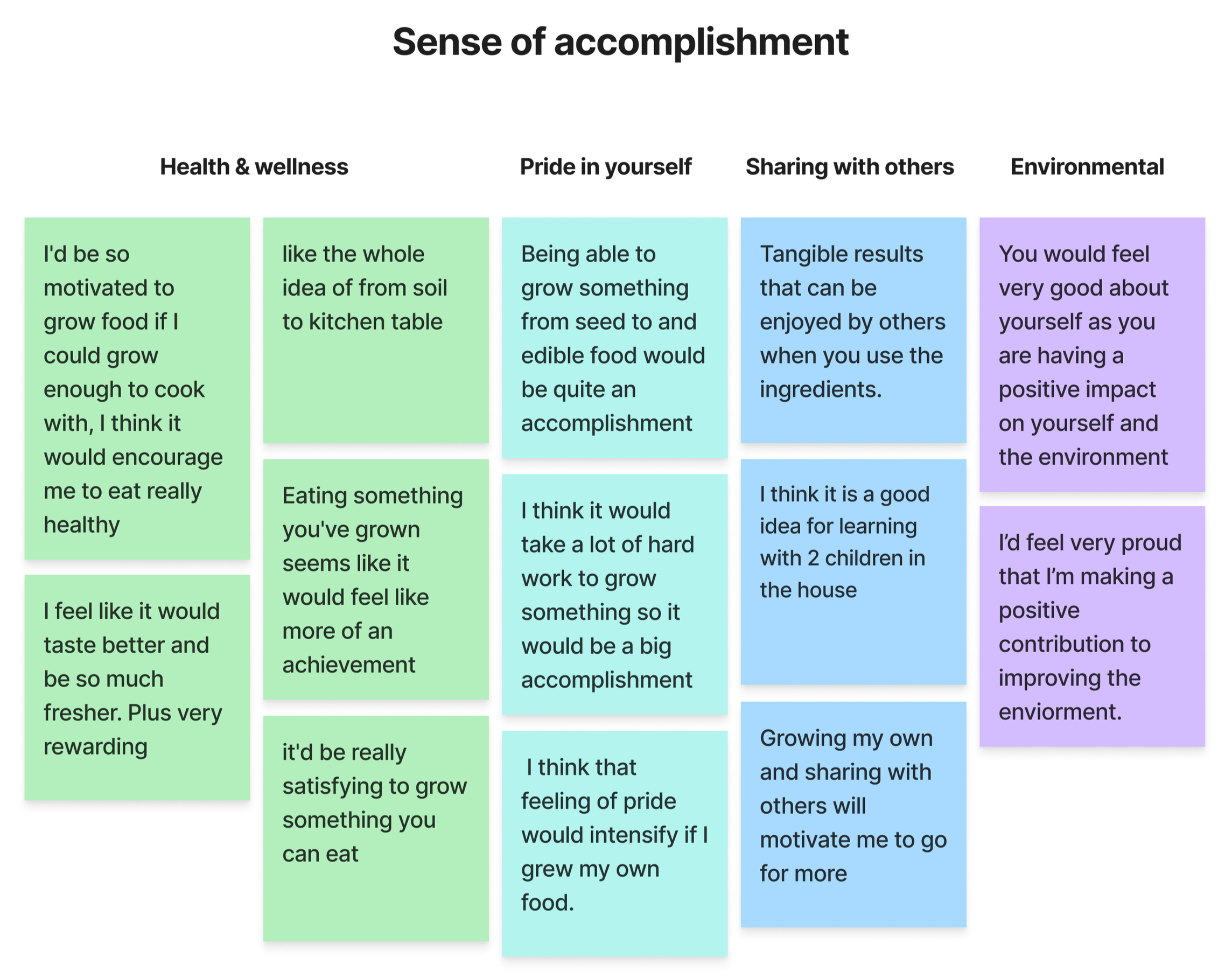
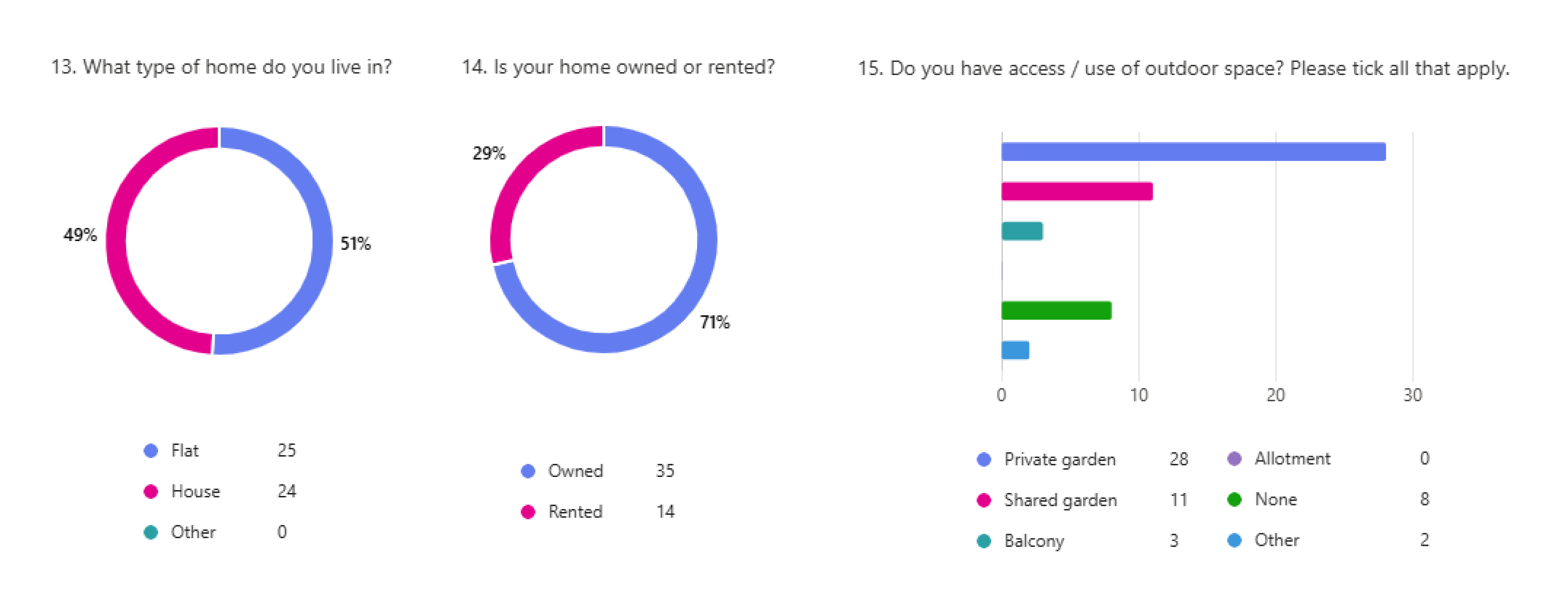
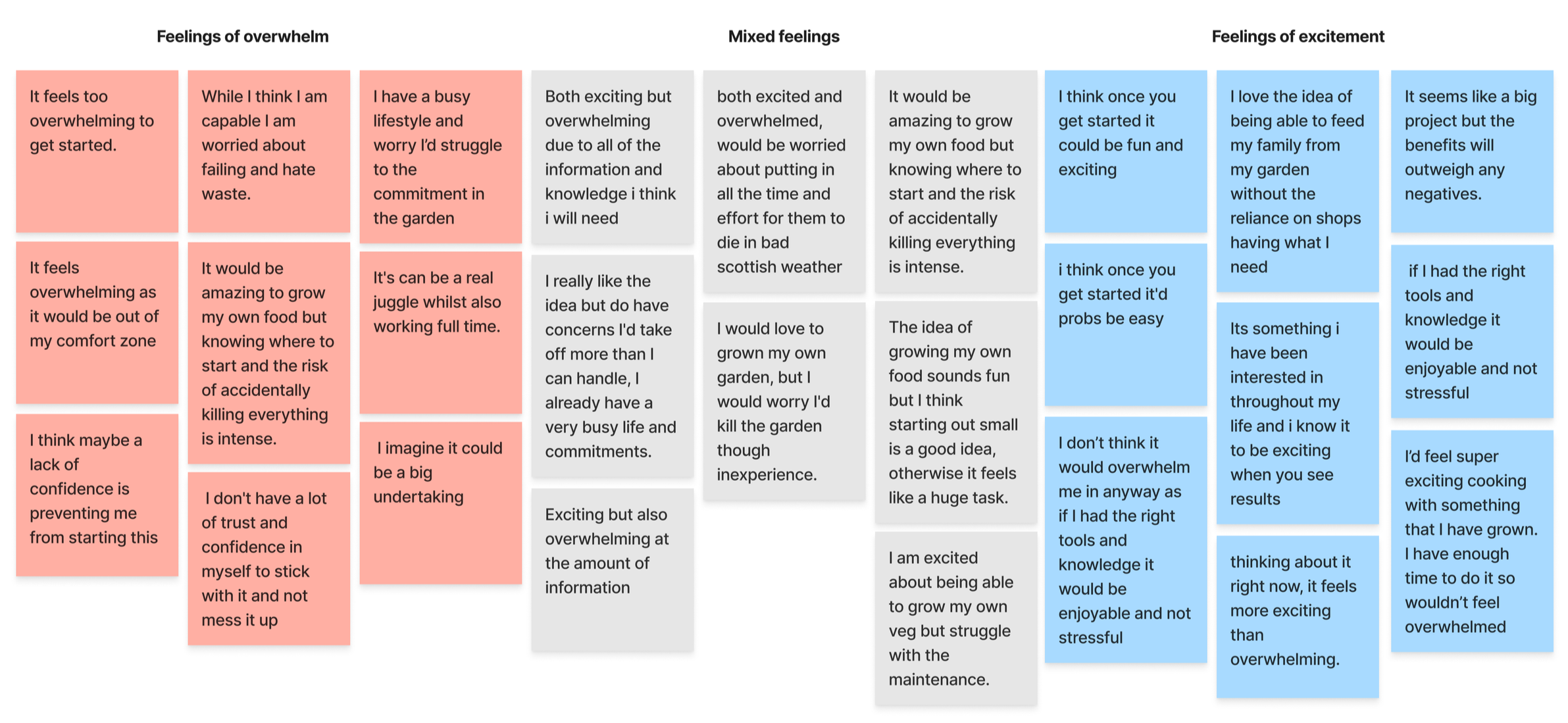
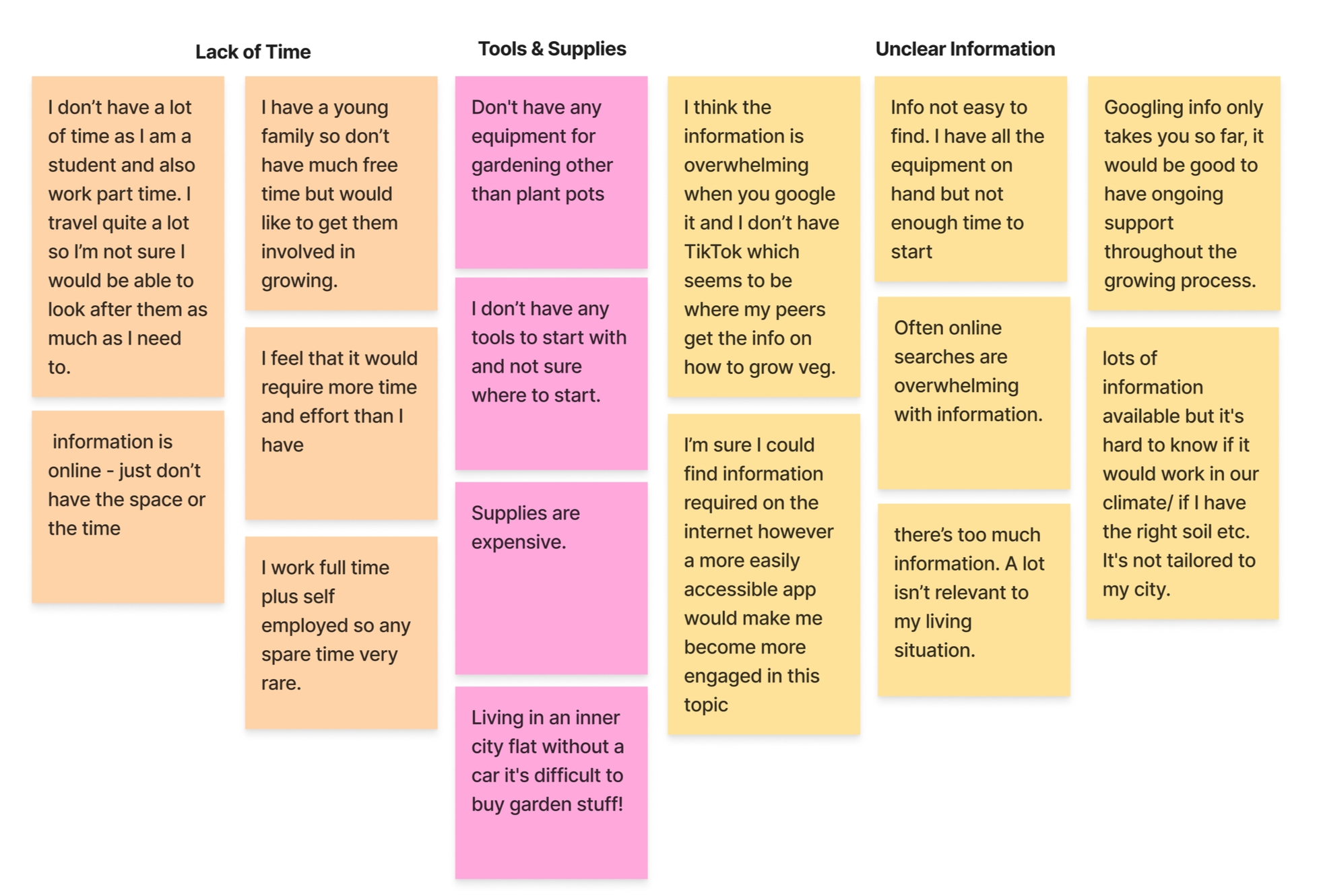
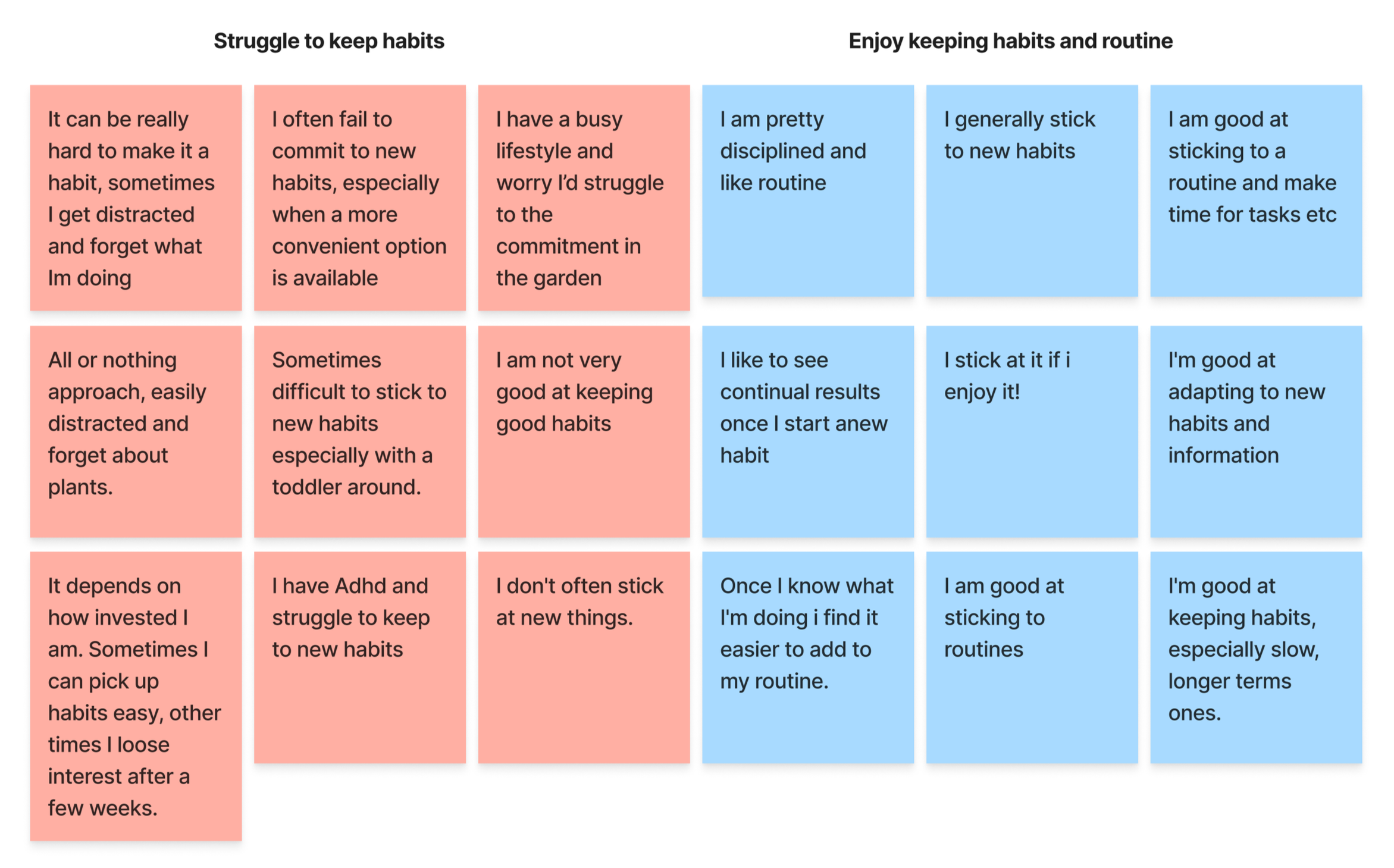
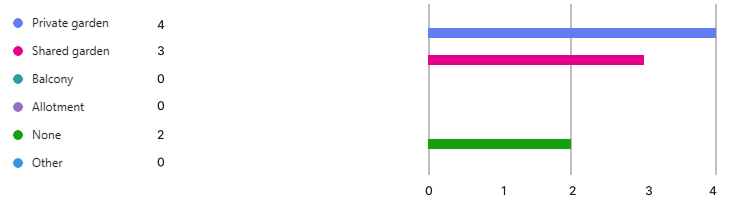

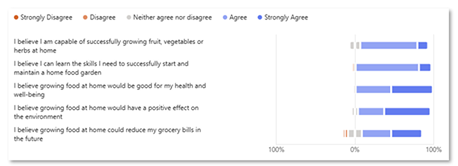
The primary research also helped identify enablers and motivators from the target user group which included being inspired by family and friends, microlearning, video learning and following a healthy lifestyle. Following the Behaviour Change Wheel framework again combined with competitor research, helped me to outline how these enablers could be implemented to overcome the barriers:
01
Personalised user experience to tailor available garden space
(Enablement)
02
Video training to make learning easier + social feed
(Education + Training + Modelling)
03
Notifications + Task checklists + Recipe section to act as reward
(Enablement + Incentives)
Taking into consideration both the barriers and the enablers identified, the next stage was to identify functions that would help overcome the barriers. Some functions suggested by the behaviour change wheel framework were deemed inappropriate for the project. For example environmental restructuring as users cannot change their home environment, instead enablement was selected as enabling individuals to grow in spaces they thought might be too small, e.g. Windowsills or container growing is more appropriate. The solution is in changing the perception of space and what is achievable, instead of changing the space itself.
Define
Using the user research, competitor analysis, heuristic analysis, I began the define stage of the double diamond process. I used insights from the research to create an empathy map, which lead to defining user personas:
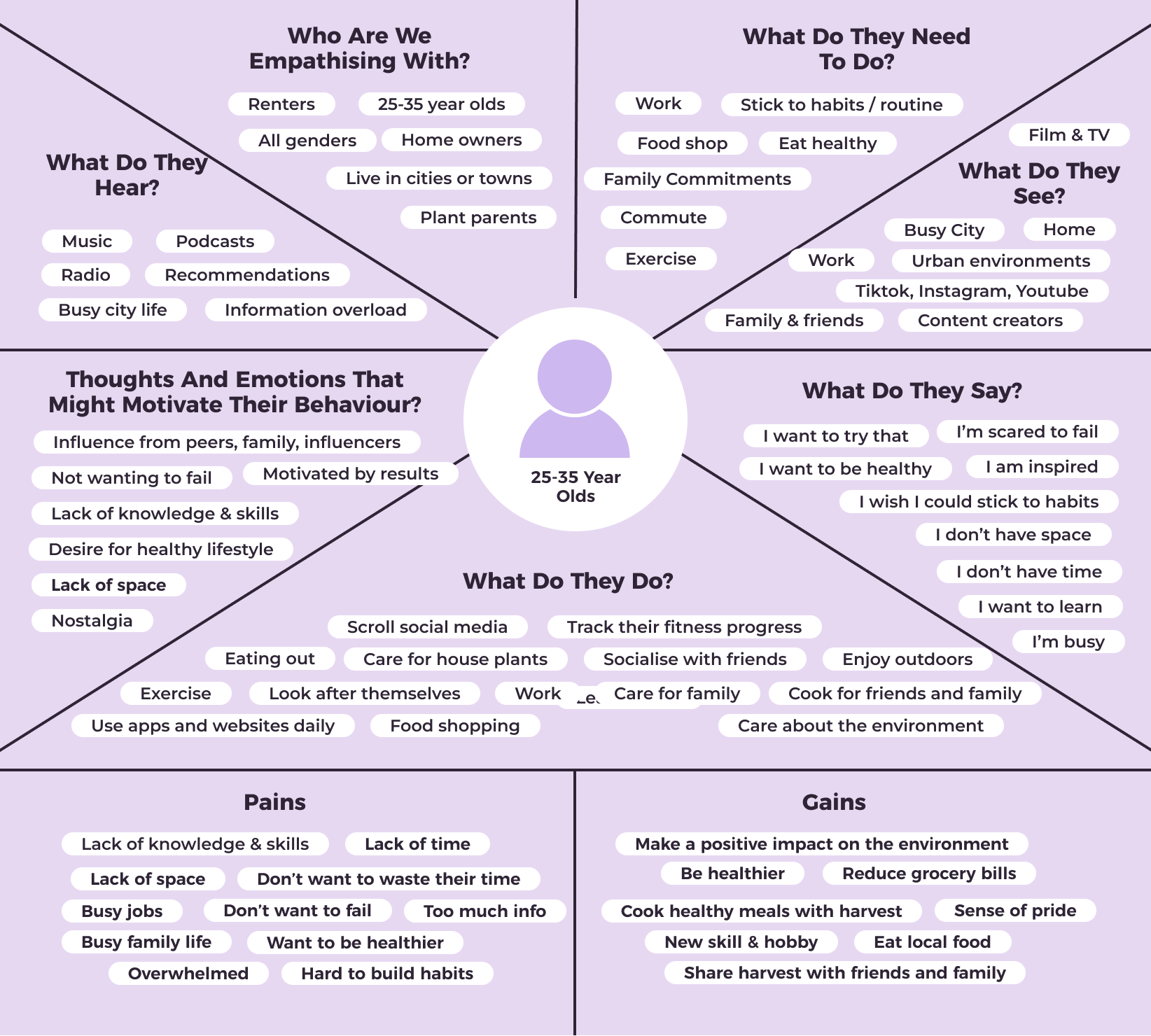
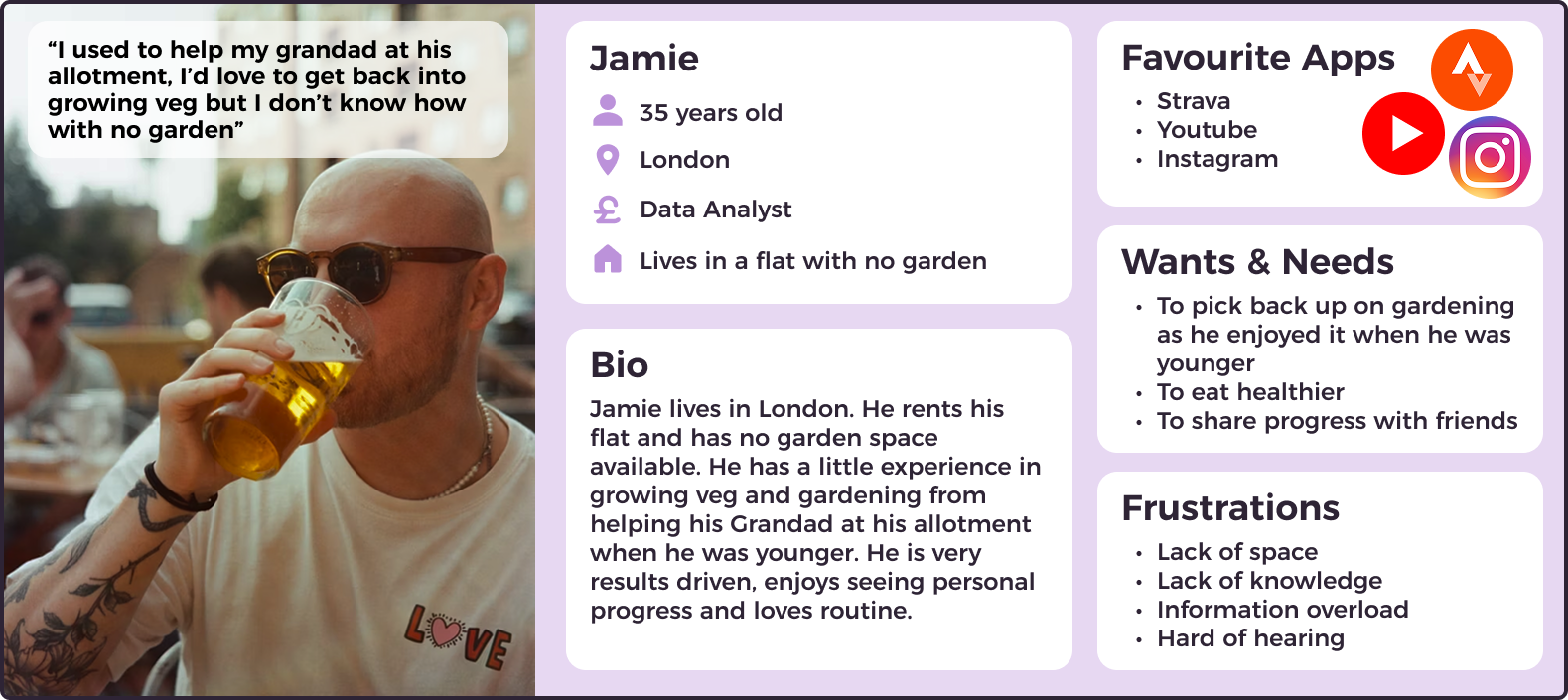
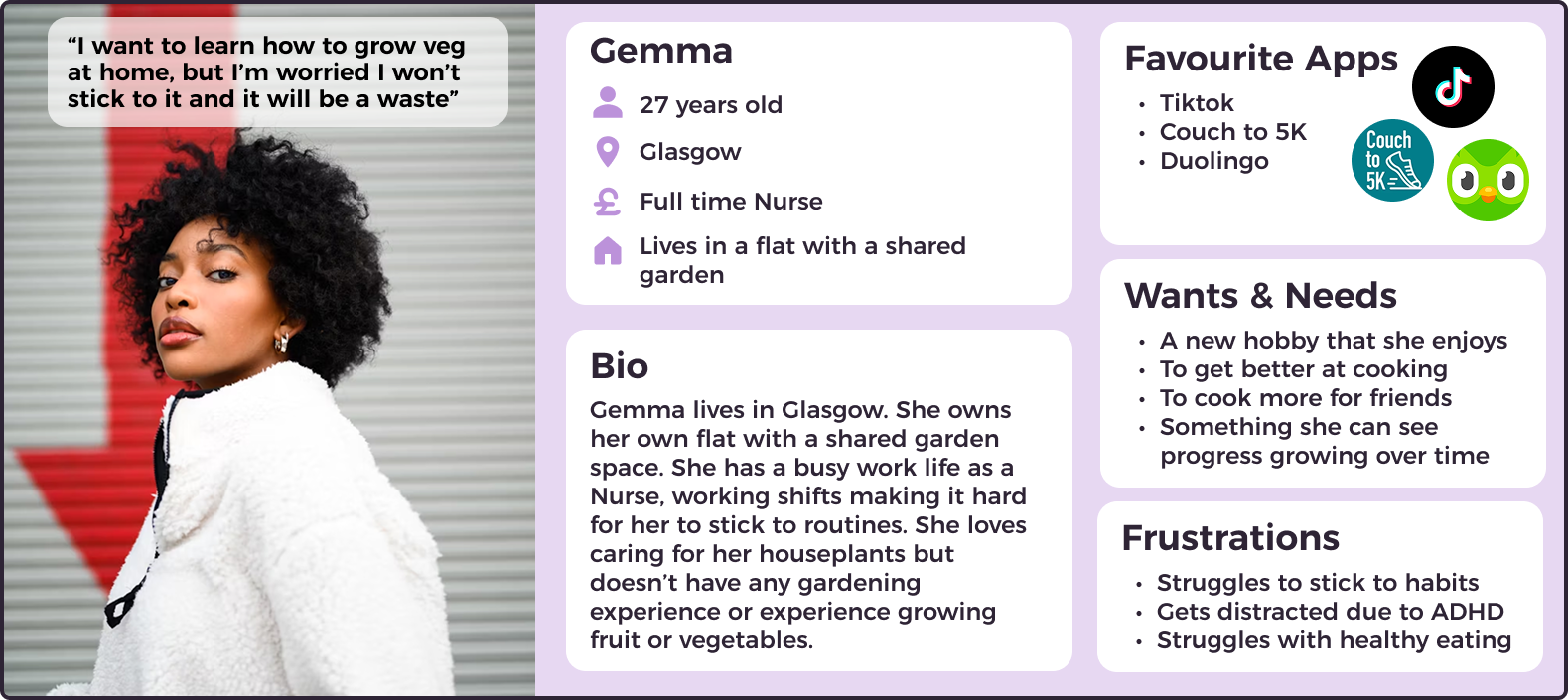
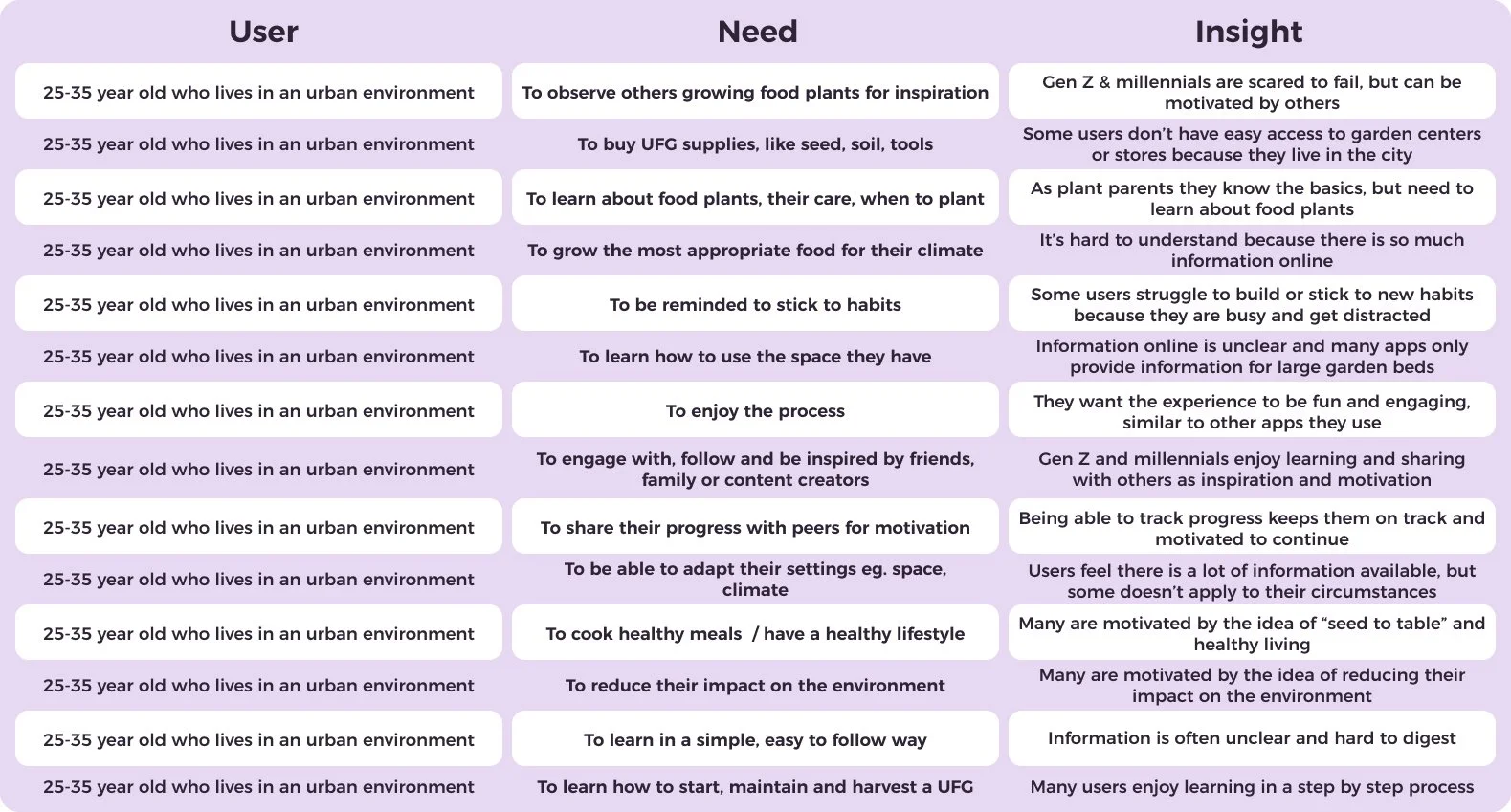
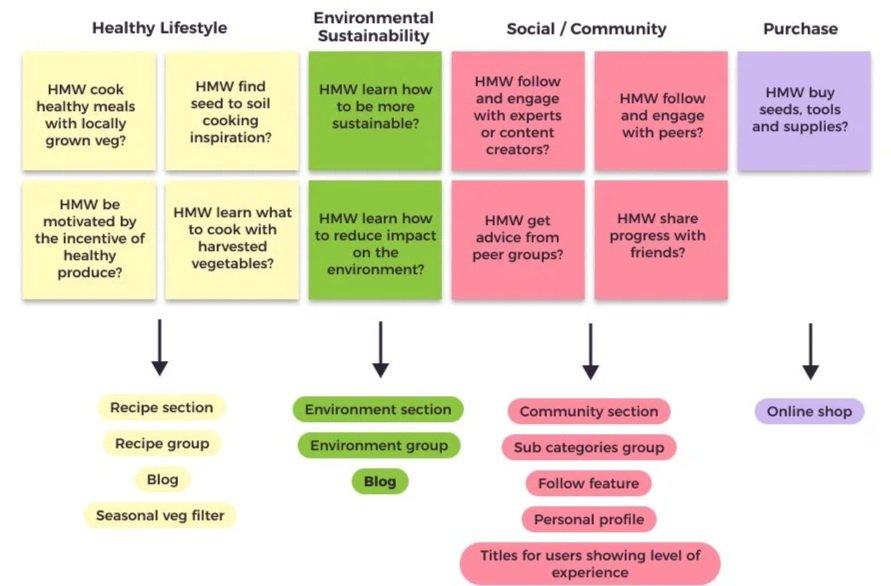
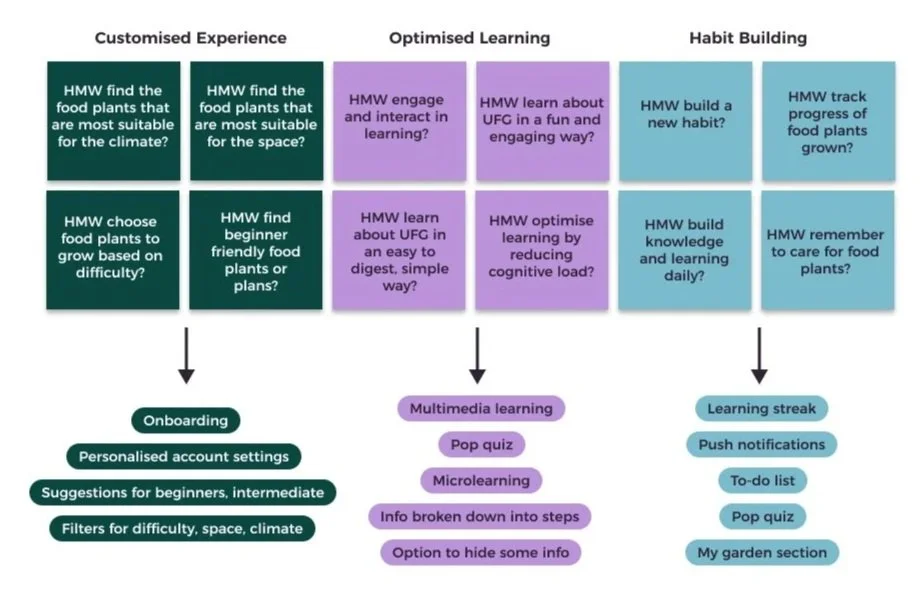
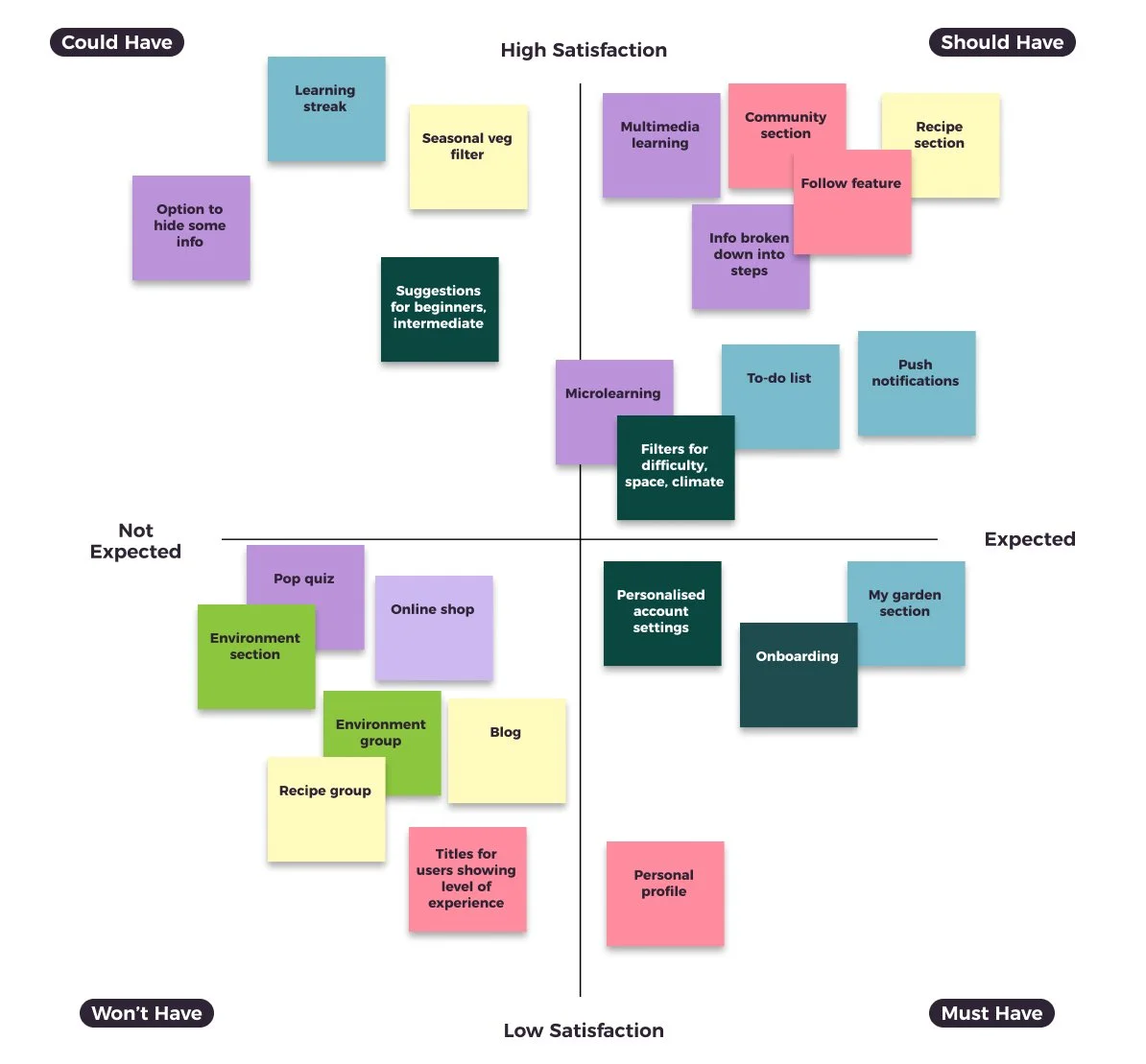
Once these had been defined, I was able to explore the Point of View statements (POV), How Might We statements (HMW), and Jobs to be Done (JTBD). These were then placed onto Kano and MoSCow models in order to determine the priority. Using Kano and MoSCow prioritisation helped focus on features that would have the greatest impact. For example, personalisation was prioritised because it directly addressed space constraints and motivation.
Develop
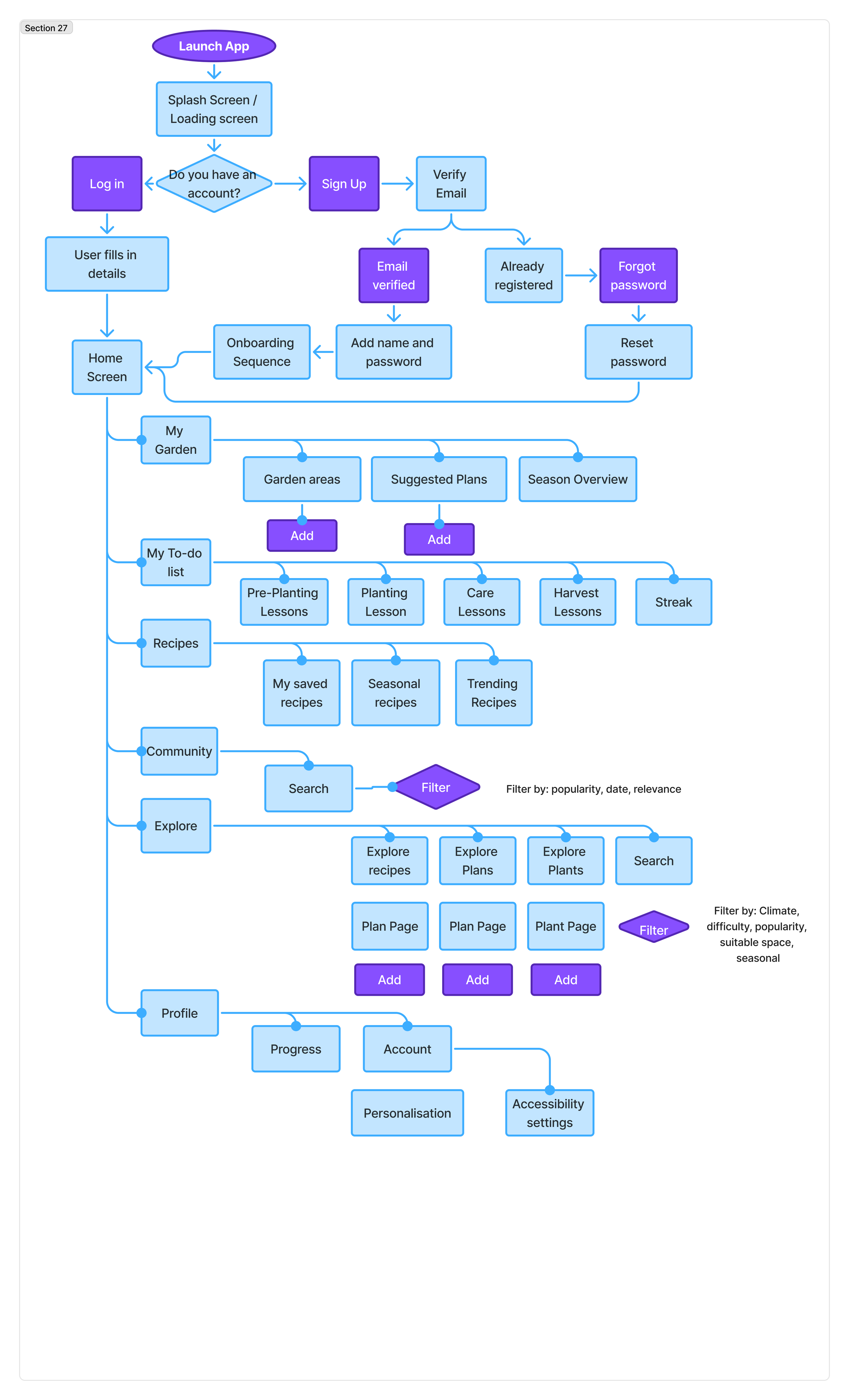
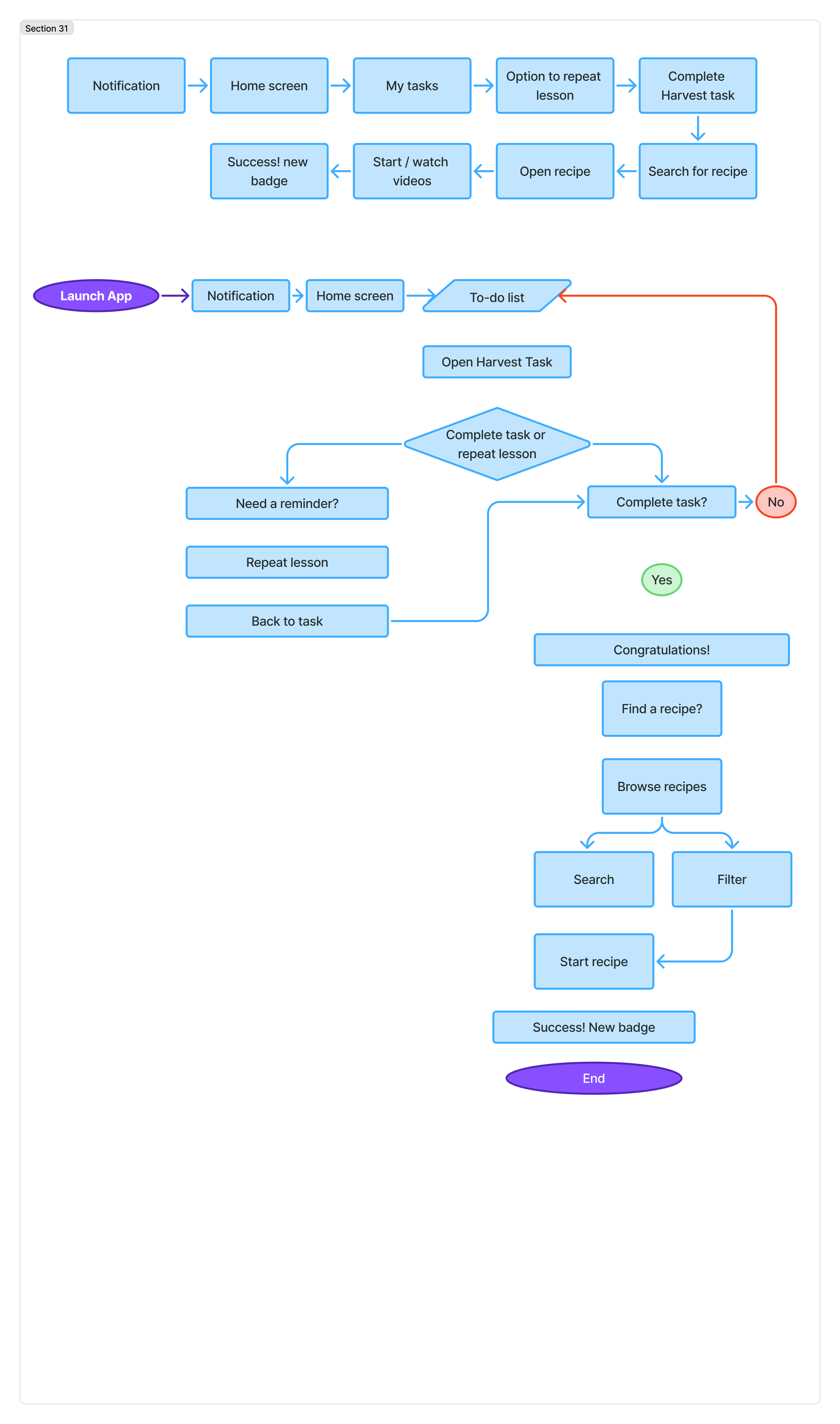
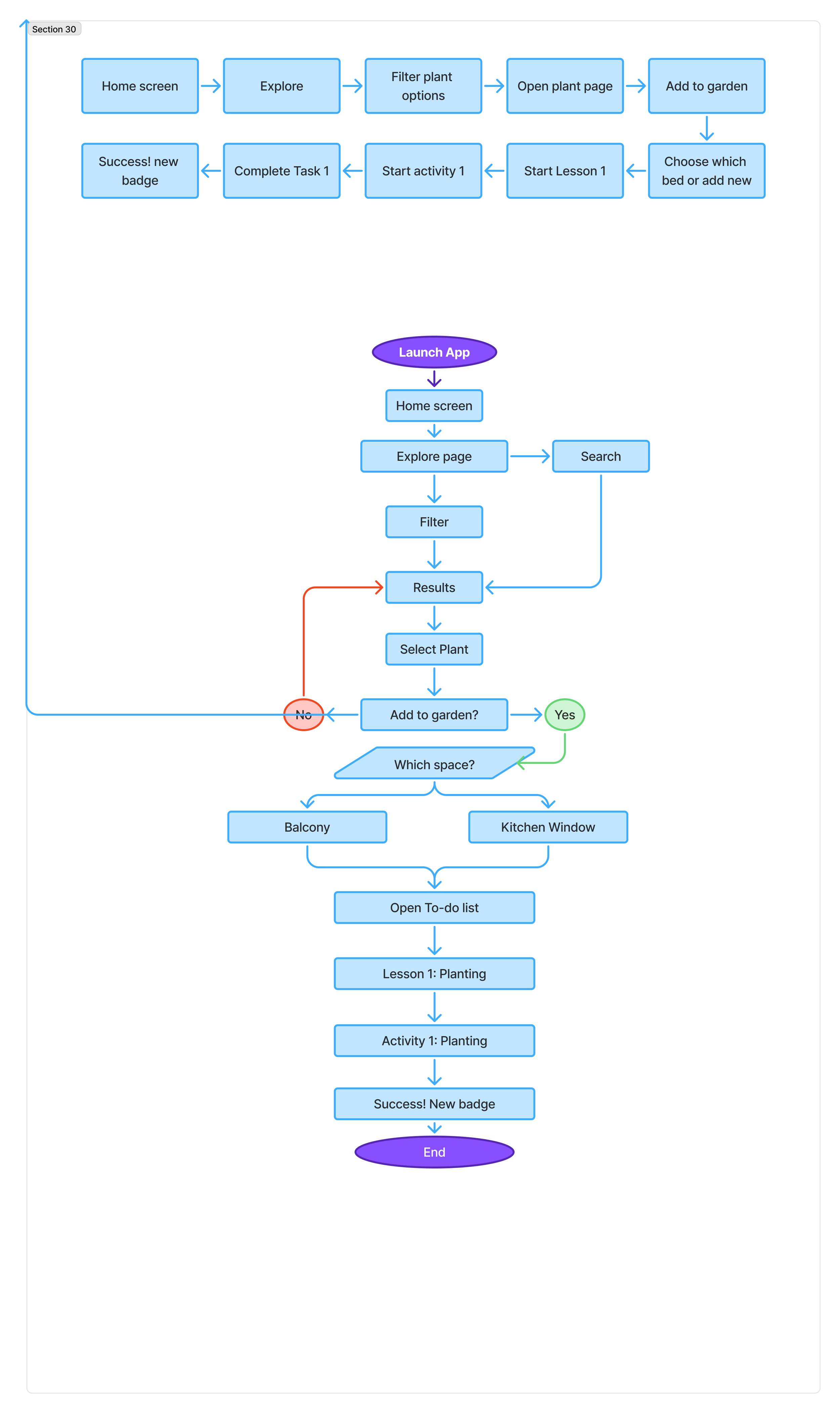
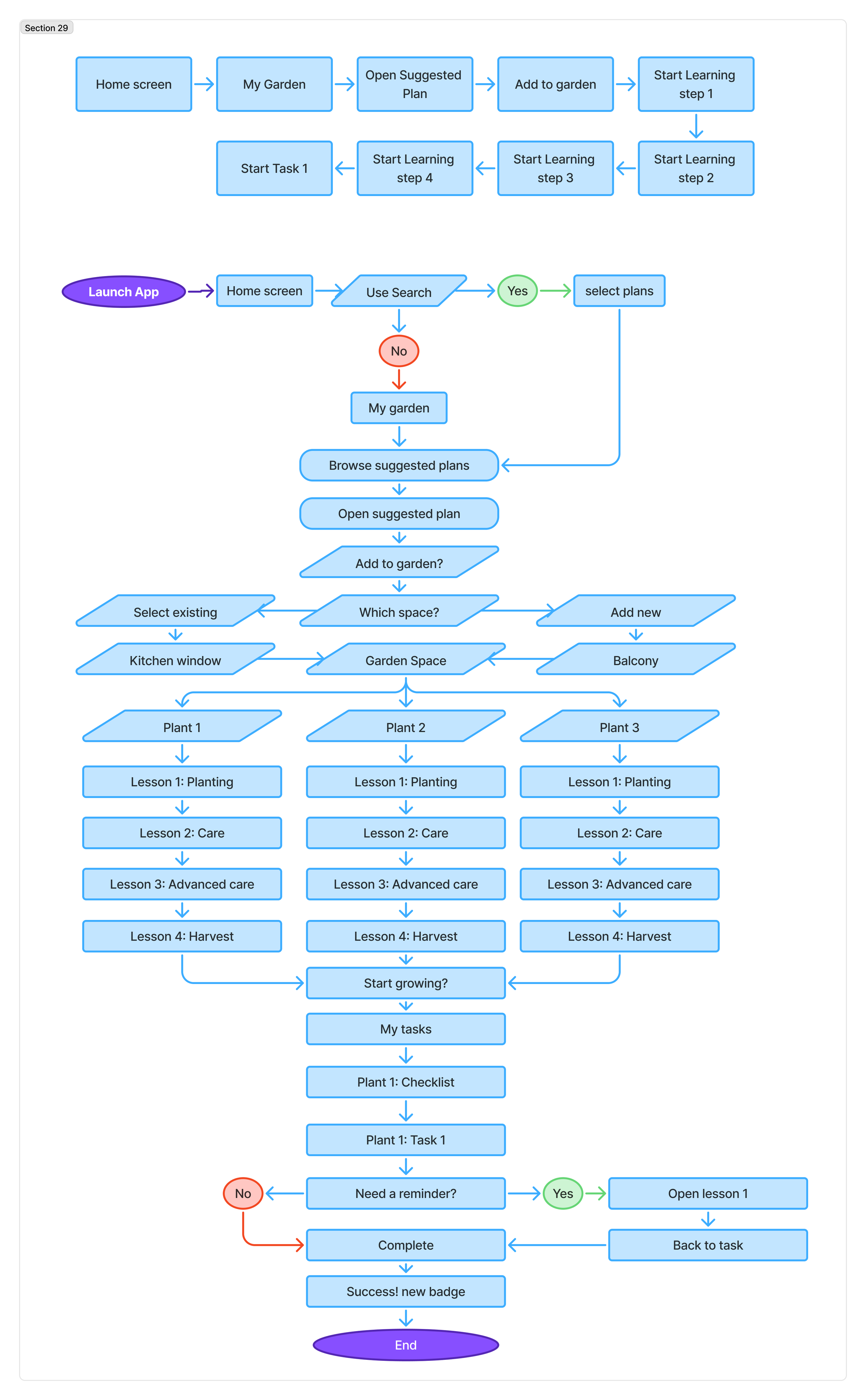
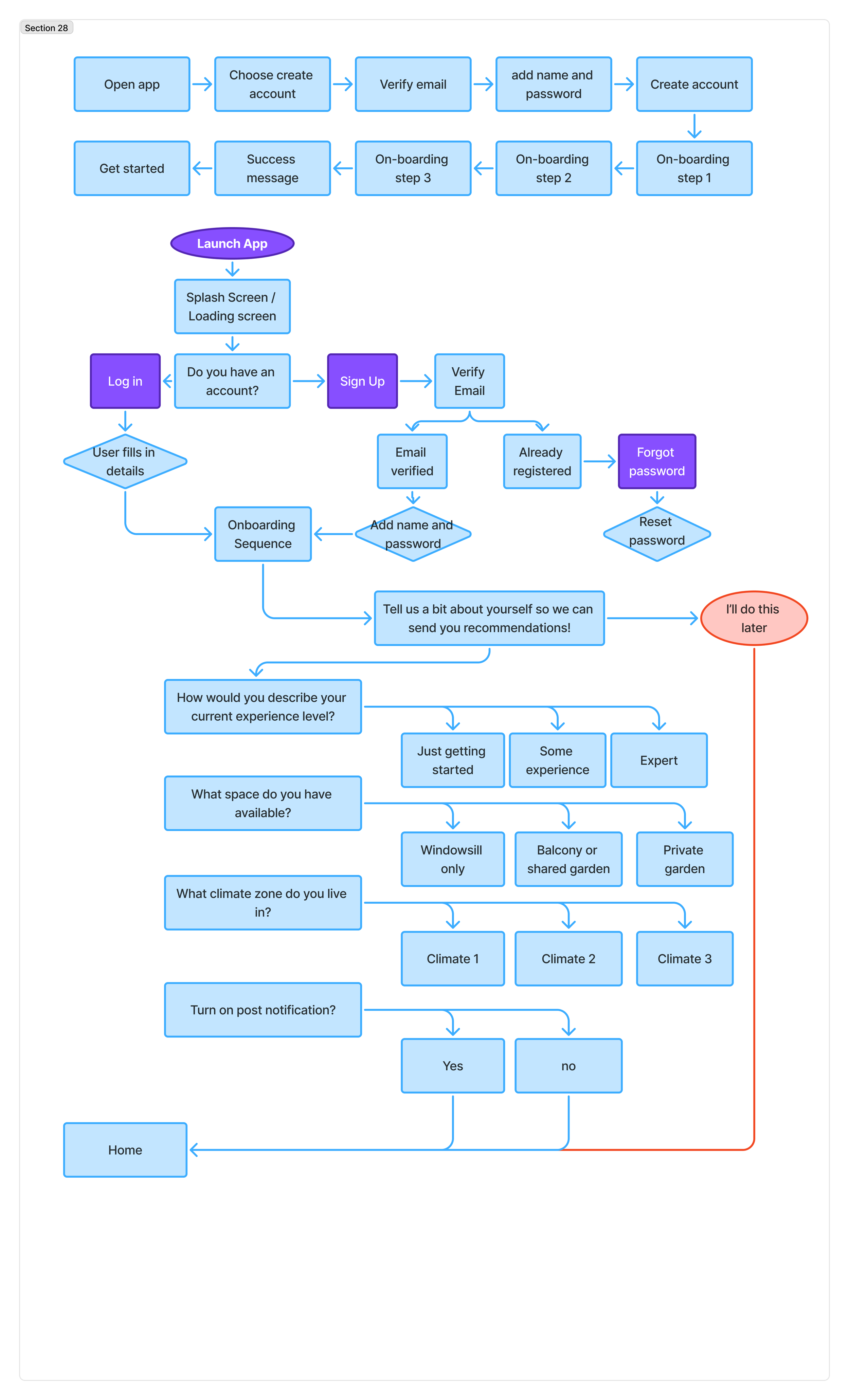
I started the design process by exploring the information architecture, task flows and user flows to get an idea of the different screens needed to present the different features used to overcome the identified barriers. The flows identified included:
01
Onboarding and Add Beginner Plan to Garden
(Enablement: Change perception of garden space, personalisation)
02
Search for a Vegetable + Start Lesson
(Enablement + Training + Education: Microlearning, Video Learning)
03
Complete a Harvest Task and Find a Recipe
(Incentives + Training + Education: Using harvested food as reward)
04
Explore Community + follow
(Modelling+ Training + Education: Motivation by seeing peers with )
I was then able to move on to low-fi paper wireframes to brainstorm layout ideas:
The low-fi wireframes were then user tested. This was important in attaining unbiased feedback from users early in the design process, to identify any usability issues and gain insights into the user experience. The user testing found that some pages were too crowded and overwhelming and that the warning screen was too dramatic, so was switched for a friendlier tooltip. I was then able to start designing mid-fi wireframes.
Deliver
After developing low-fi and mid-fi frames I was able to move onto designing and delivering my high-fi wireframes:
01
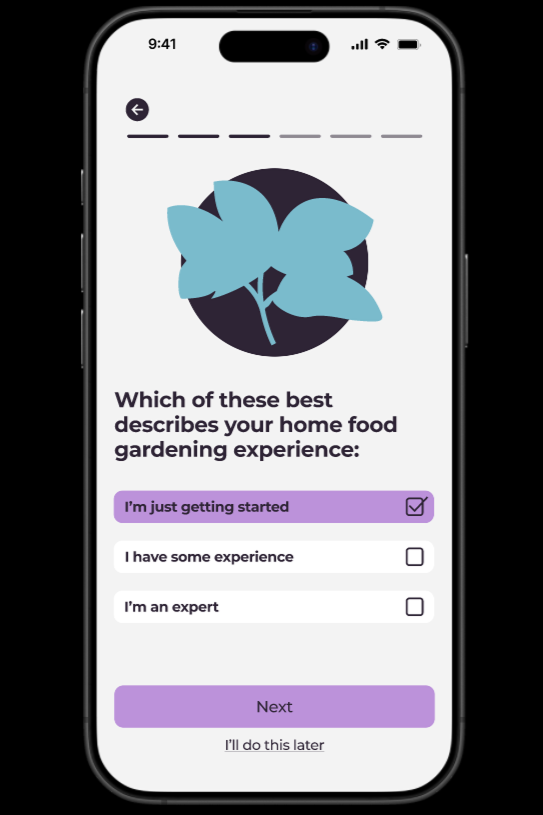
Onboarding and Add Beginner Plan to Garden
Key details that it was important to include in this flow:
Ability to personalise experience level and garden space available to enable users
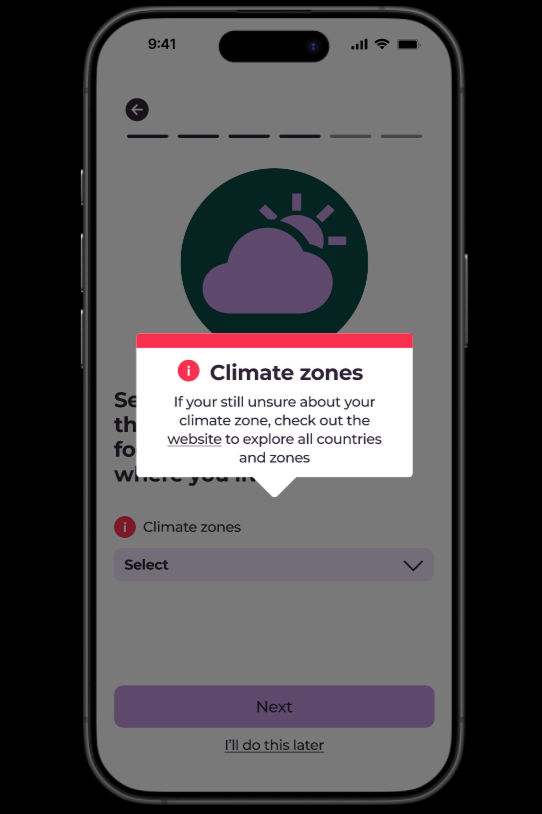
Ability to personalise climate zone to prevent users from choosing food plants that aren’t suitable
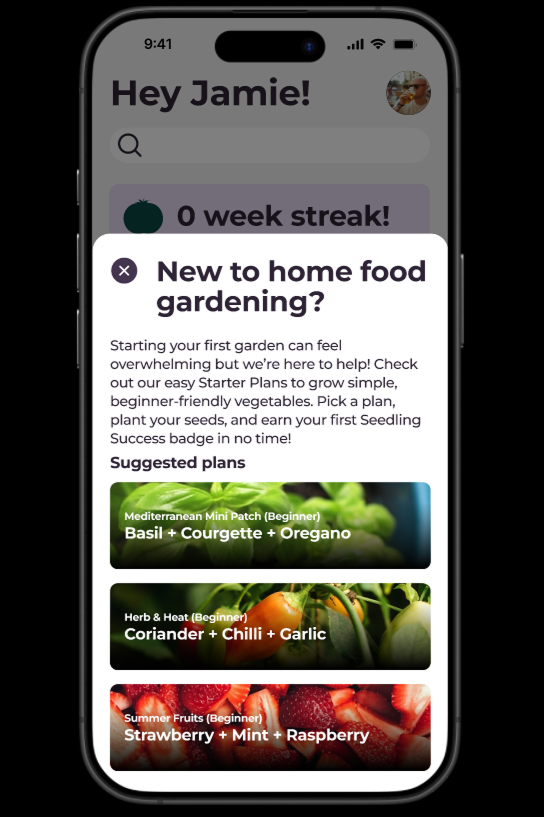
Suggested gardening plans based on personalisation to remove decision fatigue which was lead by the competitor research
02
Search for a Vegetable + Start Lesson
Key details that it was important to include in this flow:
Locked lesson content that encourages users to progress through lessons at their own pace removing feelings of overwhelm

Video lessons which leveraged cognitive theory of multimedia learning principles

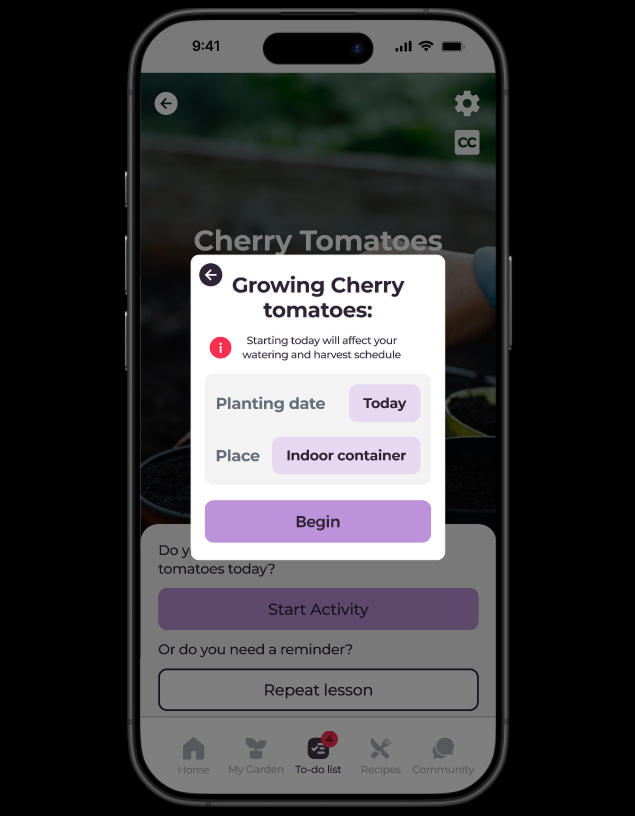
A growing schedule which populates the users to-do list to help motivate and encourage habit building
03
Complete a Harvest Task and Find a Recipe
Key details that it was important to include in this flow:
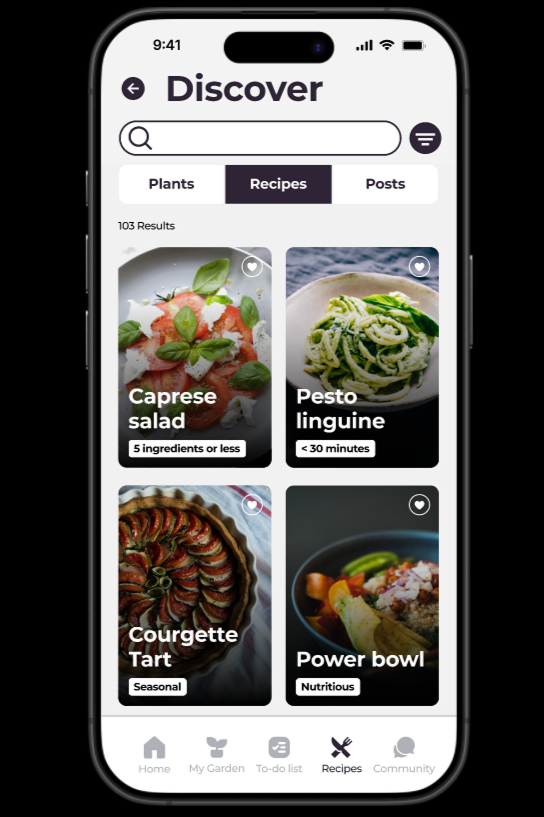
A recipe library that would motivate users to continue growing their own food to eat, using harvested food as an incentive
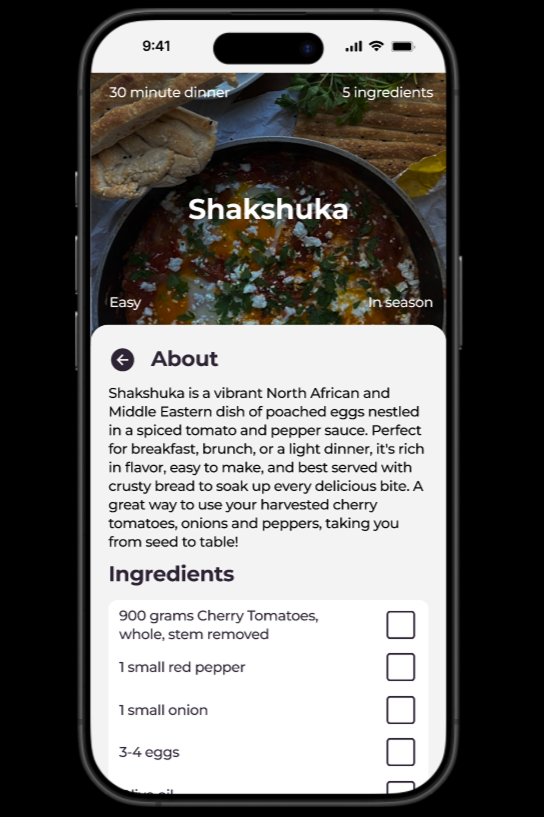
Easy to follow video recipes that follow the same cognitive theory of multimedia learning principles as the gardening lessons
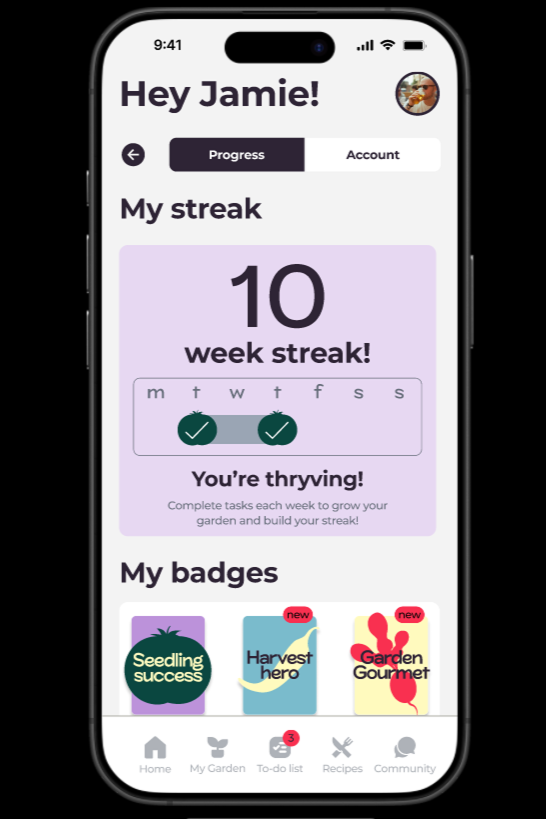
User streaks and badges to encourage and motivate users to continue progressing and built new habits
04
Explore Community + follow
Key details that it was important to include in this flow:
A social feed that leverages further learning principles including microlearning, modelling and social learning. A space where users can watch and learn from other urban food gardeners
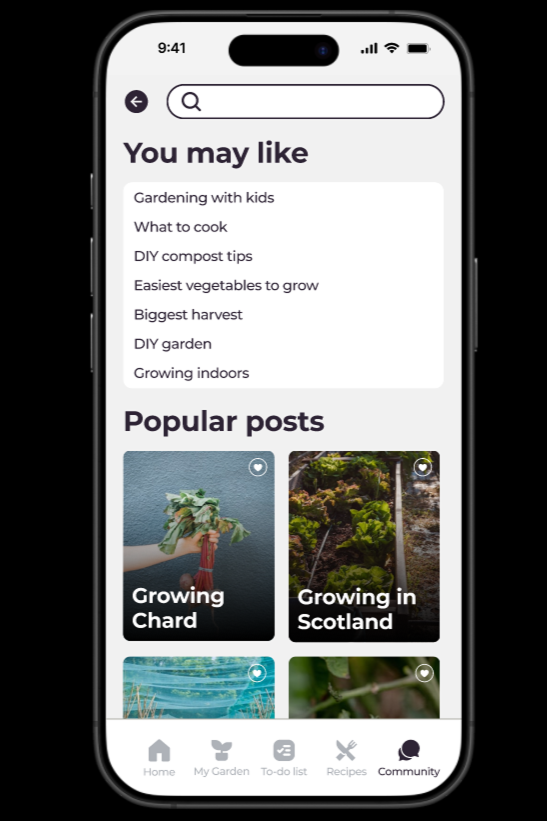
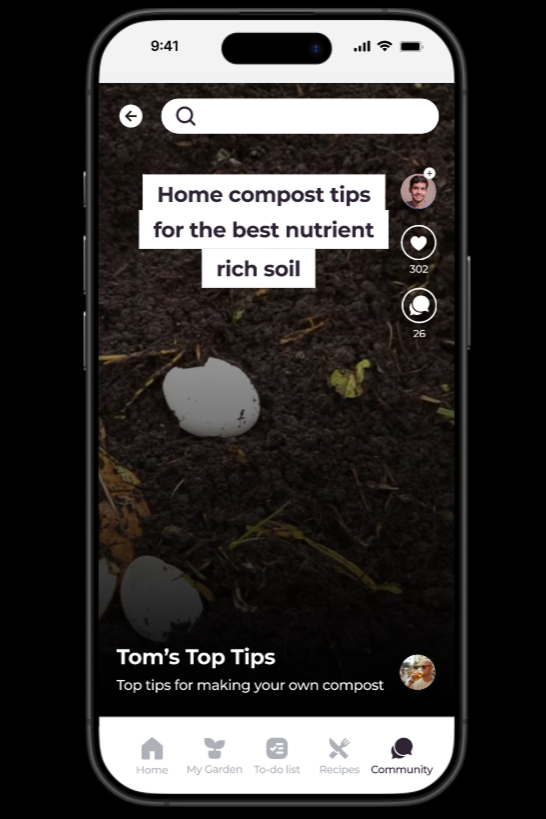
A video feed, inspired by the target demographics favourite social app, TikTok. The video content allows users to take in information easily, while being inspired by peers
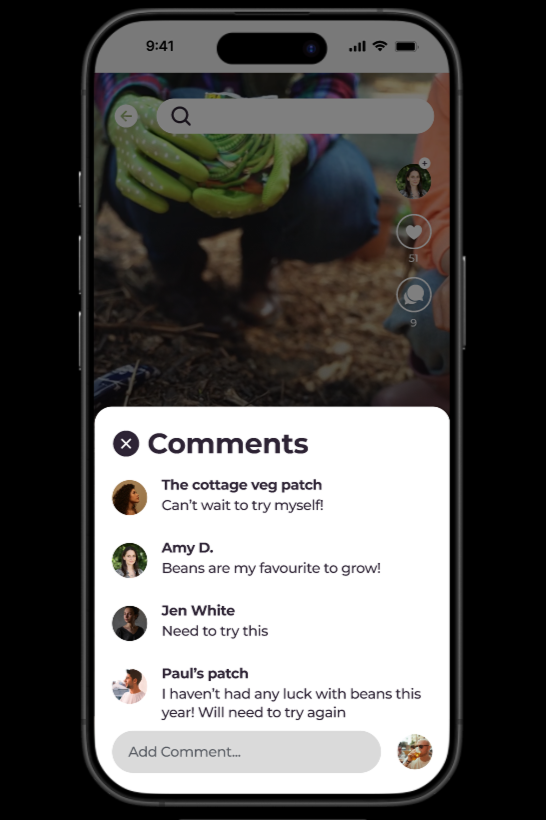
Users can comment, connect and learn tips from other users. This feature leverages “modelling” aiming to inspire users by demonstrating the possibilities from others in similar situations or environments
Usability Testing
User testing was completed to evaluate the usability of the app, using Quesenbery’s 5 E’s of usability as a guide: effective, efficient, engaging, error tolerant and easy to learn.
The user test was made up of four parts: a pre-test questionnaire, an observation during the test, a post-test questionnaire and a post-test interview. The pre-test questionnaire was used to establish the participants background information, such as previous urban food gardening experience, home and garden space, and previous barriers they have experienced. Next participants were given four tasks, relating to the four flows designed. The observations were made to understand which elements or steps in each task users struggled with and what could be improved upon in future iterations. Finally participants where given a questionnaire using likert scales to answer and then interviewed to gain qualitative insights.
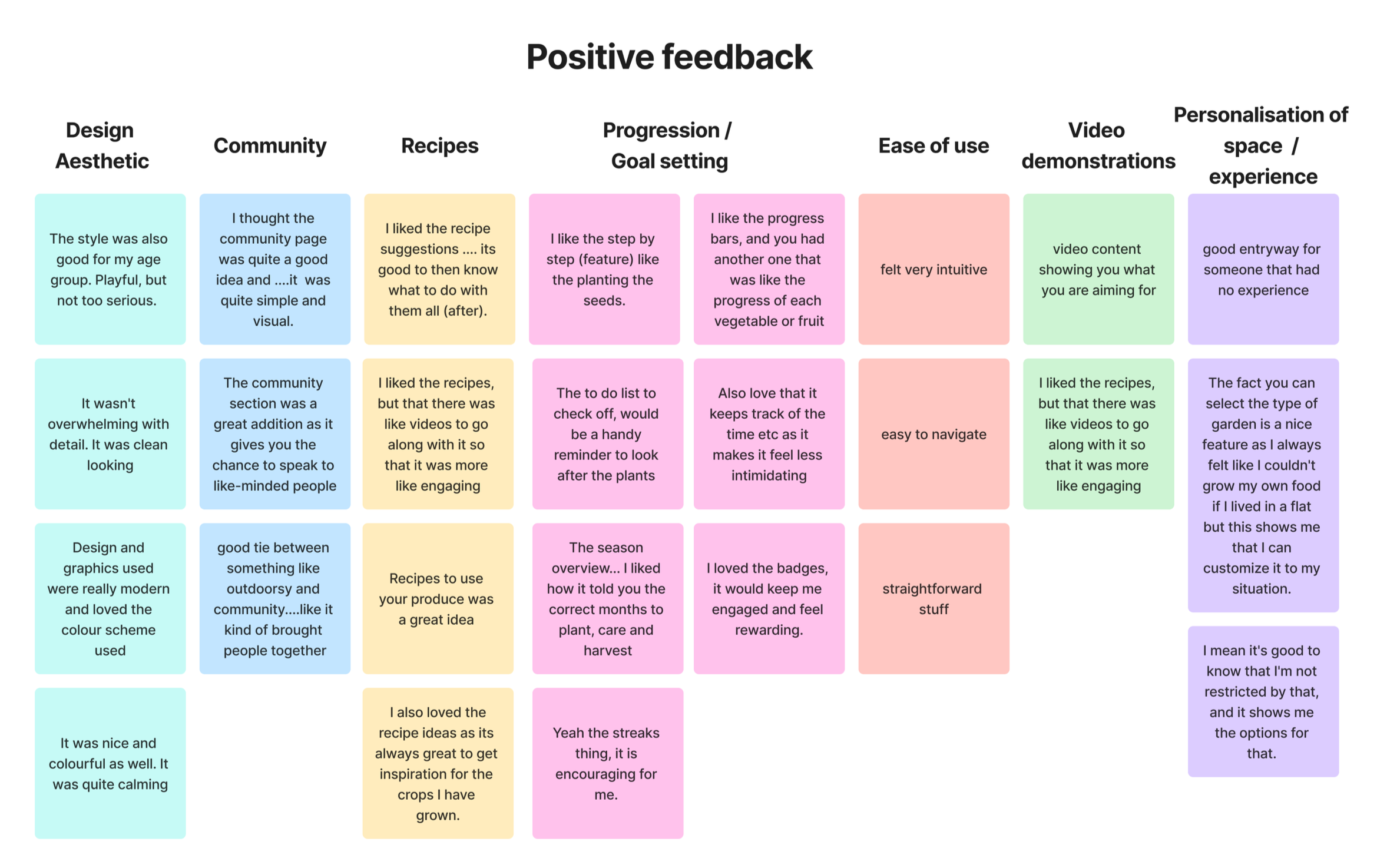
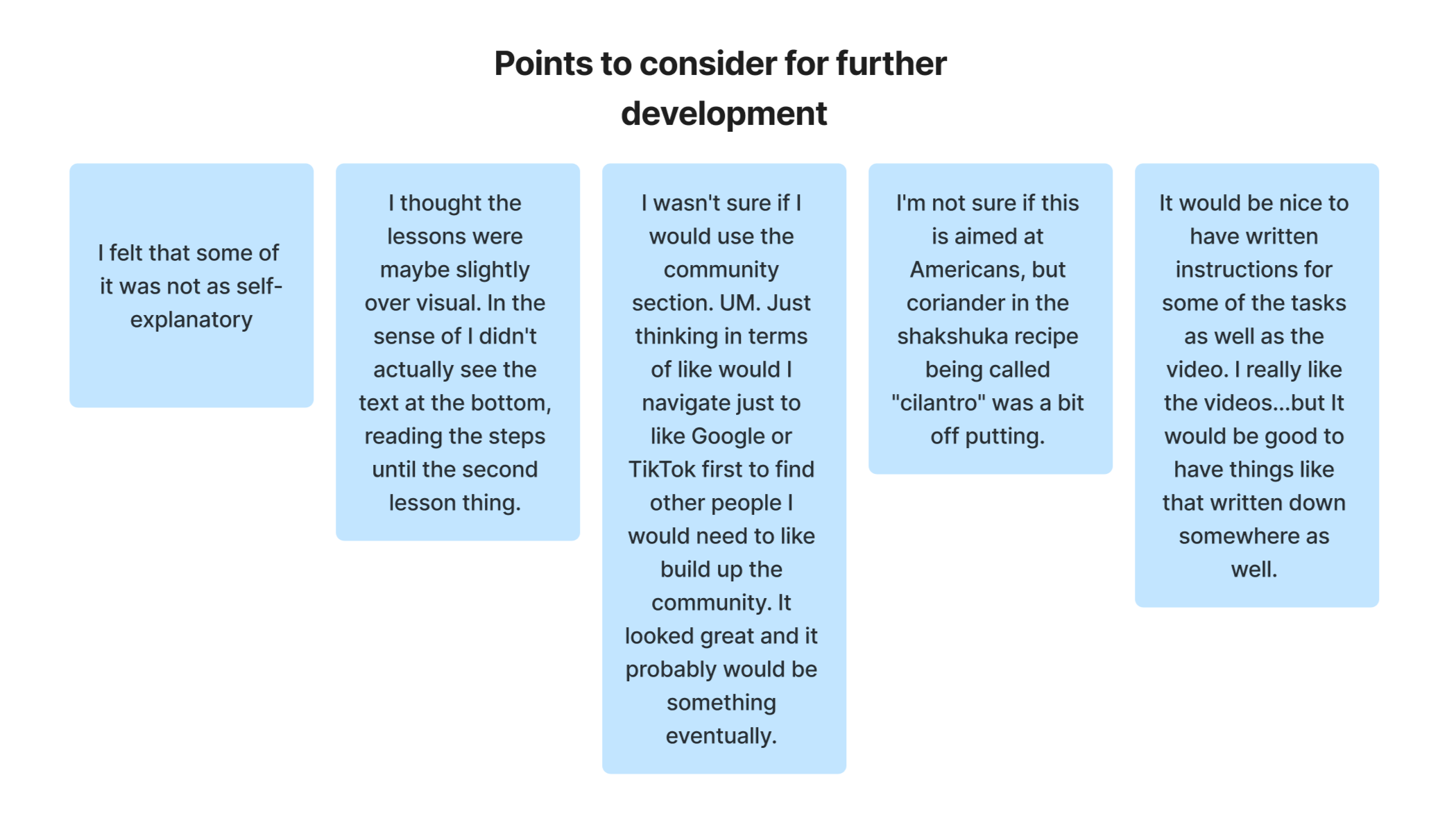
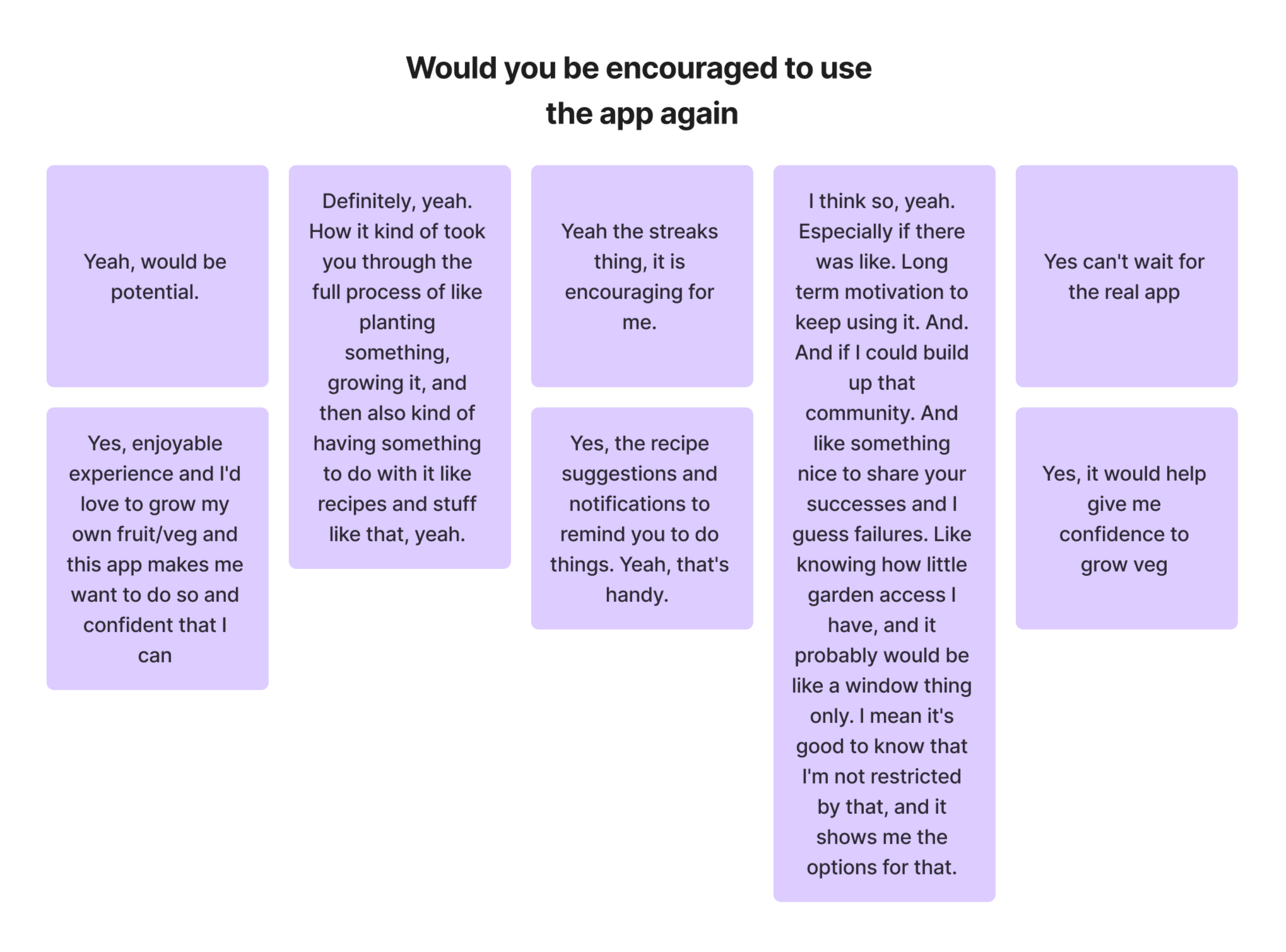
From the interviews and open-ended questionnaire questions, affinity maps were used to summarise key features that were mentioned in a positive light, some negative feedback which should be considered for further development and overall would participants be encouraged to use the app again.
Limitations & Next Iteration
The limitations of this project stemmed mainly from the short timeframe of the project. The short timeframe meant there were limitations at all stages of the project, from research to design iterations, to testing.
At research stage, the main limitation was the lack of diversity in the user research with 75% of participants living in Glasgow. At development stage, the limited timeframe meant only an early-stage concept was created, which used placeholder content for lessons and only four user flows meaning some important areas of the app such as the lessons were underdeveloped. It also meant that there was no time for further iterations of the app using the findings from the usability test.
Future iterations should consider lesson development, focusing on applying the cognitive theory of multimedia learning principles. Another key point to explore is monetisation of the app, whether through a subscription model or through partnerships.