UX Design Project
Get Savvy.
Design Brief
To design a mobile application for Glasgow City Council, aimed at providing new students in Glasgow a guide to the city, where they can book event tickets and access discounts, driving sales and footfall to local businesses. Following the Double Diamond Design process, utilise UX tools and theories to create a high-fidelity prototype, 15 page process document and a video presentation.
Students, both international and local, are looking to explore the city, save money with discounts, meet new people and ask for recommendations from peers.
Problem
A mobile application where users can find out about events, discounts and local venues. Something that is more appealing to the younger generation and that can be filtered to their interests.
Outcome
Discover
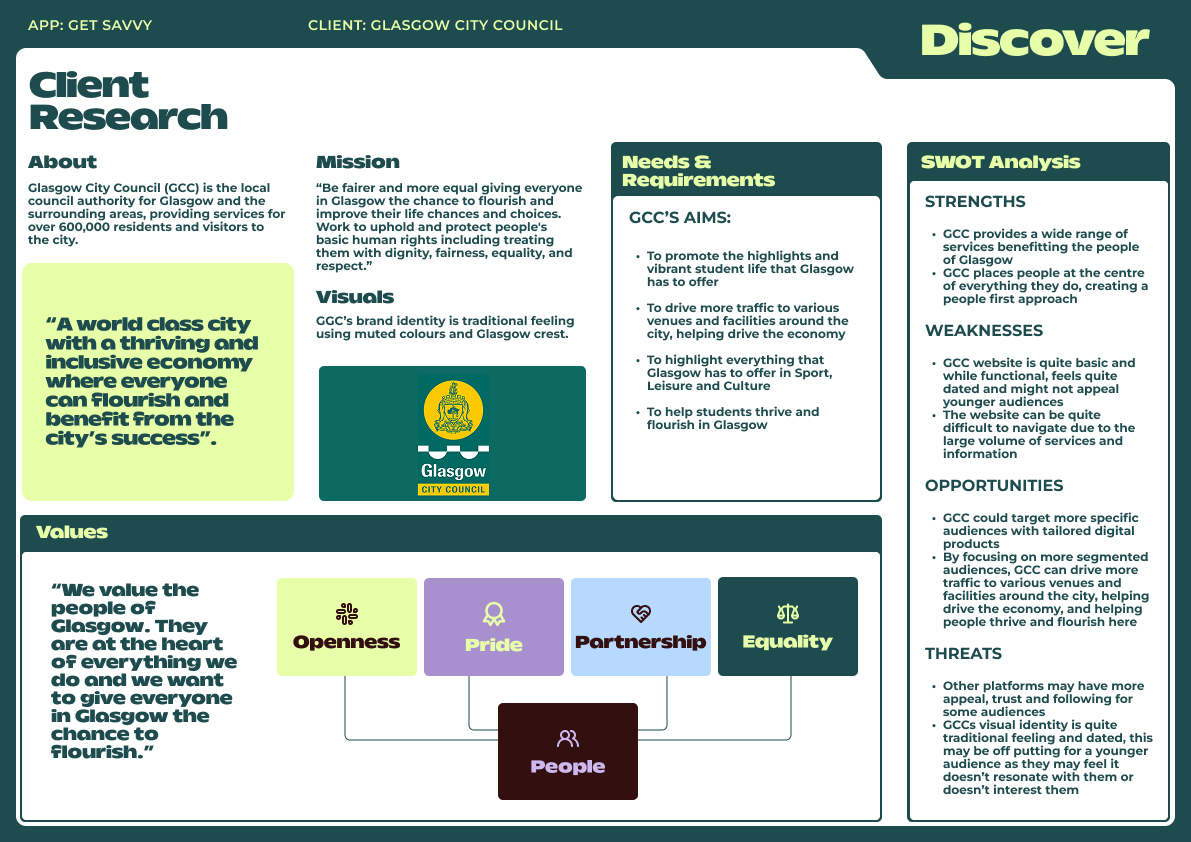
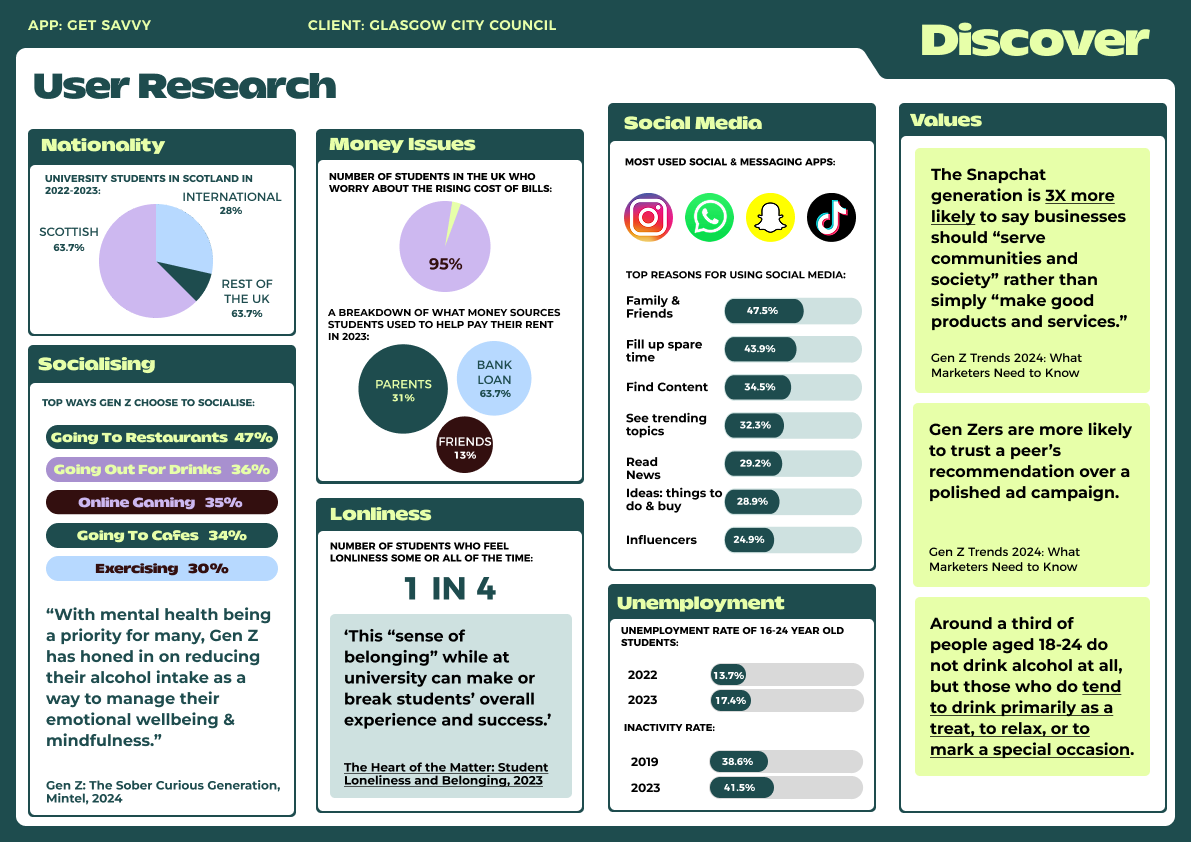
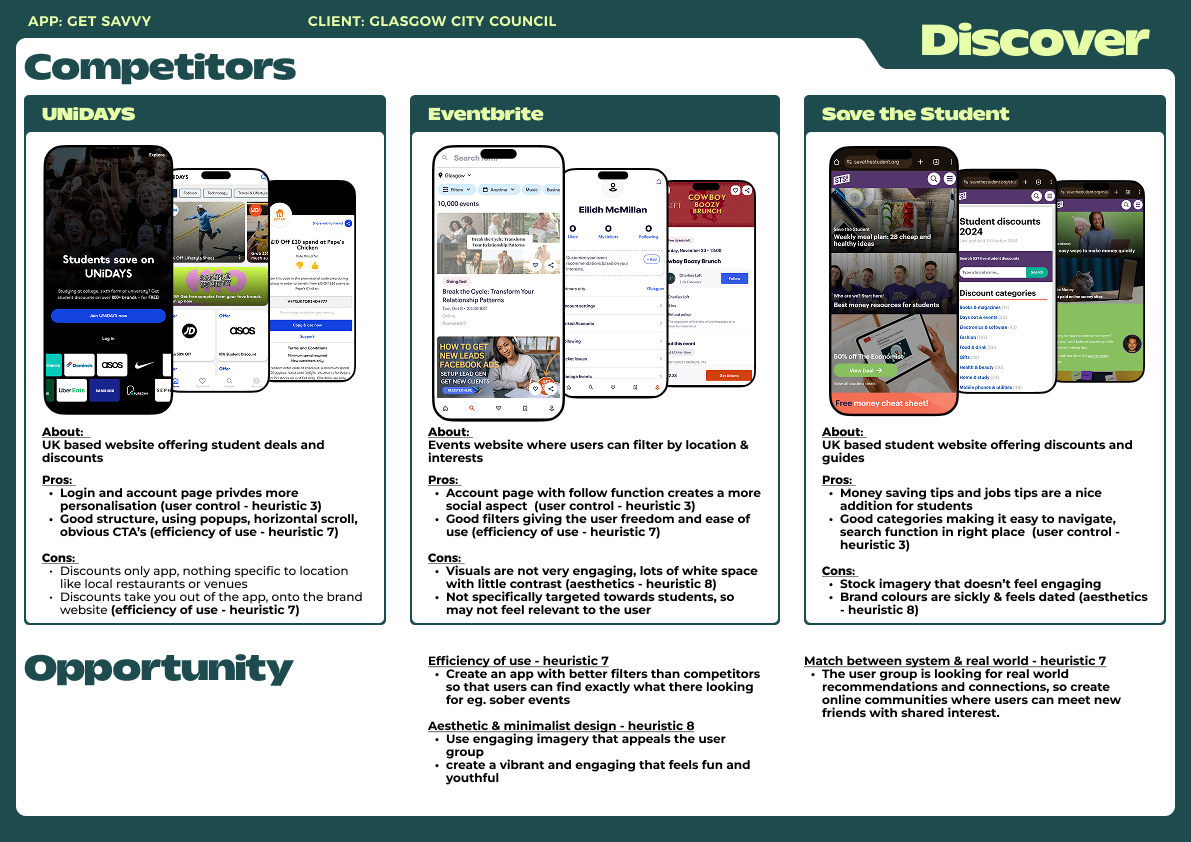
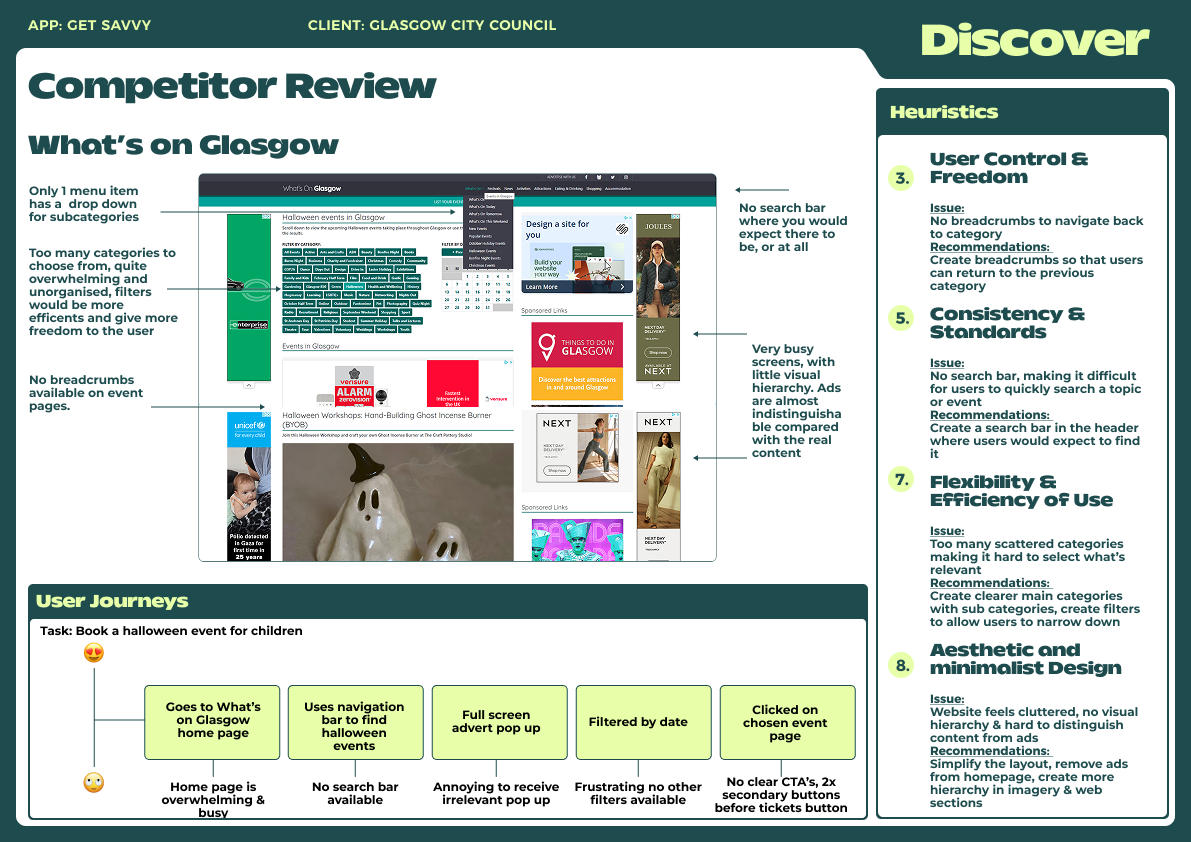
In the discover stage, both client research and user research were explored through secondary research. Next a competitor review using heuristic evaluation was completed. To summarise the section, the market opportunity was outlined.
Key UX tools used included client research, user research and competitor analysis / heuristic evaluation. The secondary research helped identify some key findings:
01
Gen Z are less interested in drinking Alcohol
02
Gen Z are more likely to trust Opinions of peers
03
Competitor apps are cluttered with poor filters
Define
The information gathered in the discover stage was then evaluated to identify user needs and problems that the app can address, using UX tools to clearly define.
Key UX tools used included empathy mapping, user personas, POV statements, How Might We (HMW) statements, Jobs to be Done (features) and Kano and MoSCoW models to prioritise features.


Develop
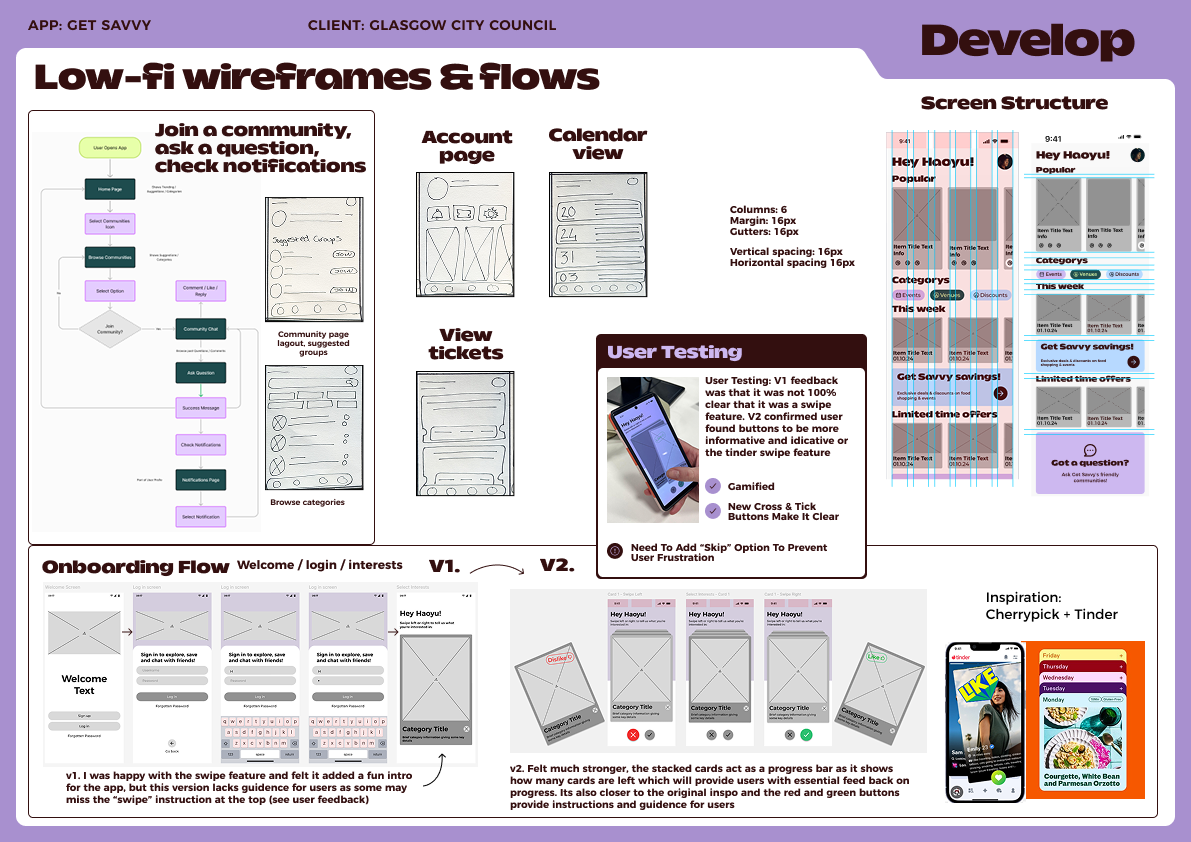
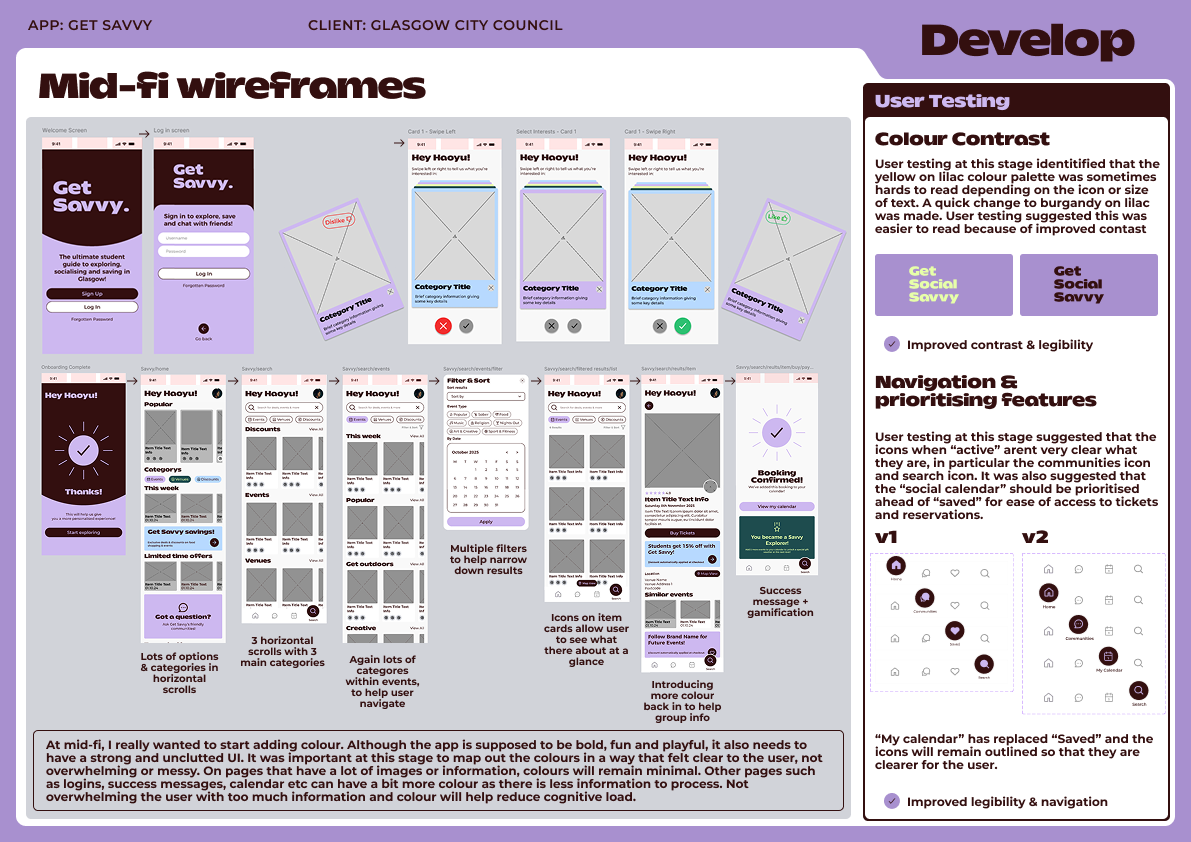
At this stage, solutions to the identified problems were explored, starting with user flows and low-fidelity paper sketches to generate multiple ideas. Light gamification was also explored to encourage engagement, through awards for app usage and swipe features inspired by Tinder. This was followed by visual identity development, where the goal was to create an identity that represented Glasgow as a fun, vibrant and diverse city, making it clear to users that the app is more than just informational.
Key UX tools used included, User Flows (Figjam), Crazy 8’s, Low-fi wireframes (paper & Figma), Early User Testing, Gamification, Visual Identity, Mid-fi wireframes (Figma).
01
Onboarding flow
02
Buy a ticket to an event
03
Join a community


Deliver
After developing low-fi and mid-fi frames I was able to move onto designing and delivering my high-fi wireframes:
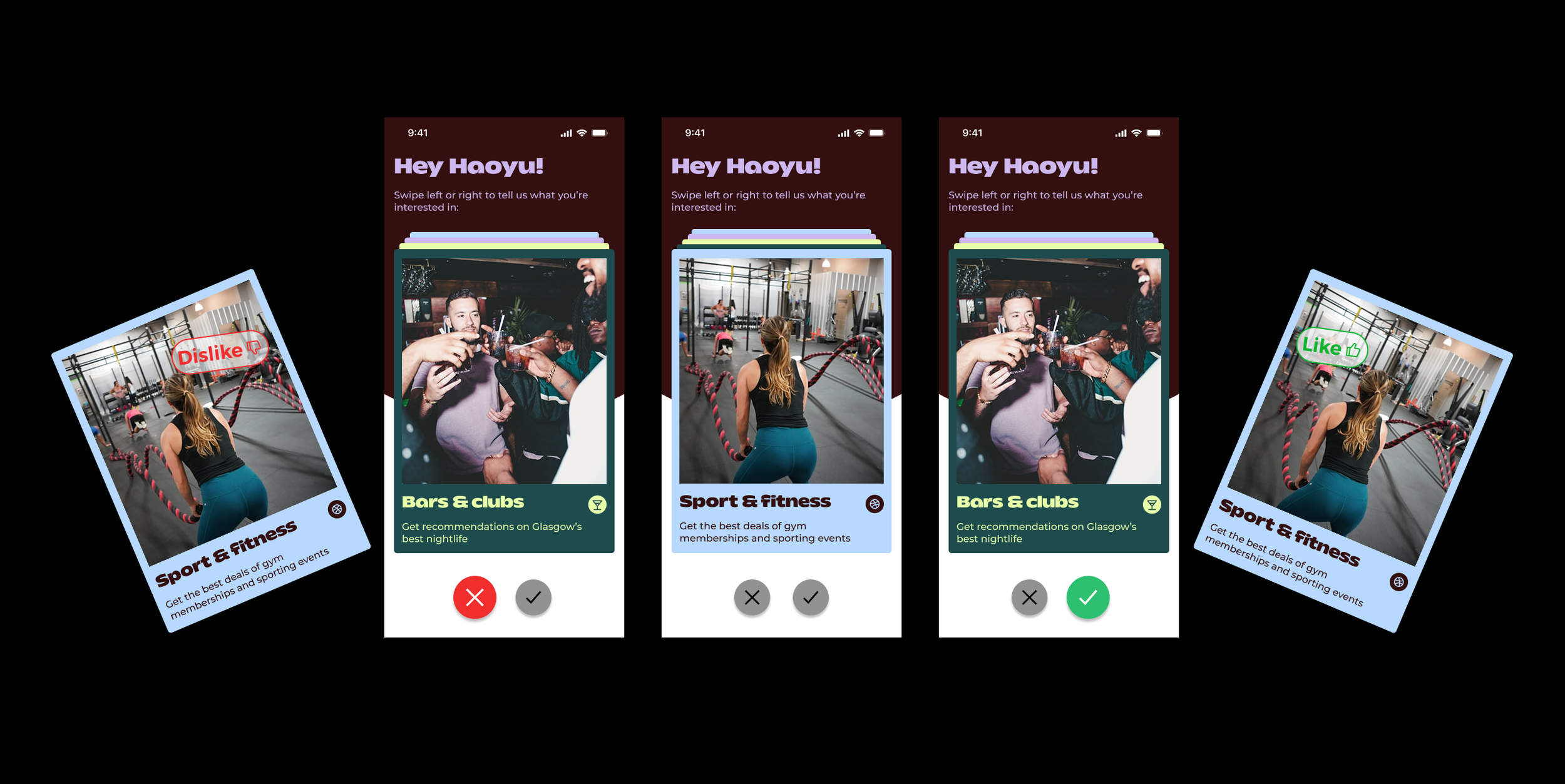
The “Tinder Swipe” left or right feature was added as a fun way for users to share their interests. The gamified feature was chosen as it is internationally recognised and was a more engaging way for the system to learn about the user’s interests to give them recommendations.
01
Key features of the Onboarding flow
02
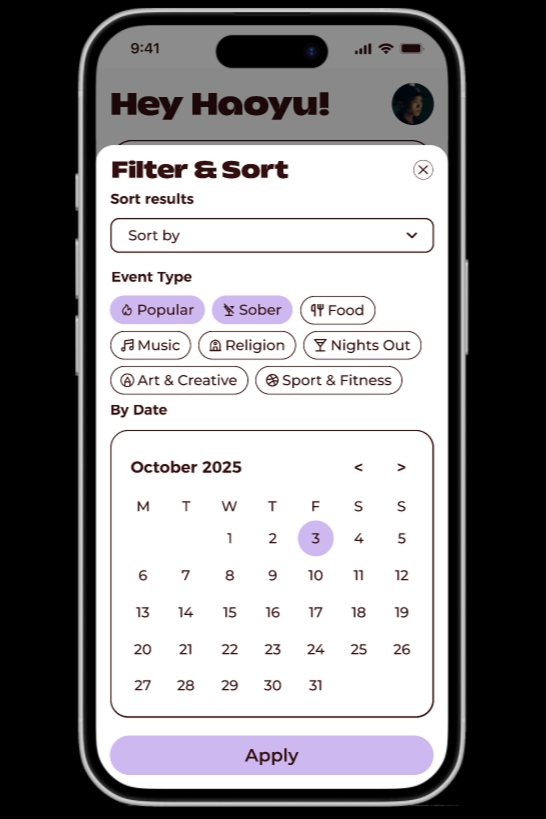
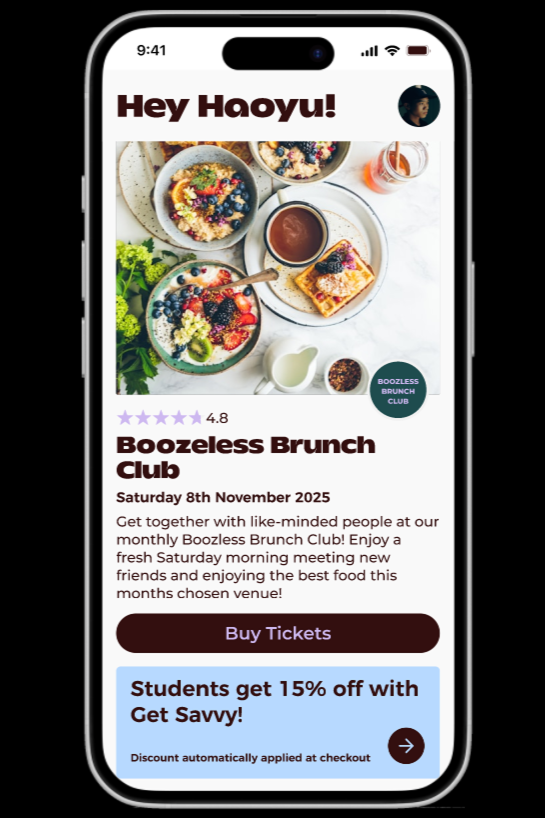
Key details of the buy a ticket flow:
Users can filter events by relevant interests including “Sober” events, lead by the user research
Users can read peer reviews, buy with exclusive discounts and see similar events
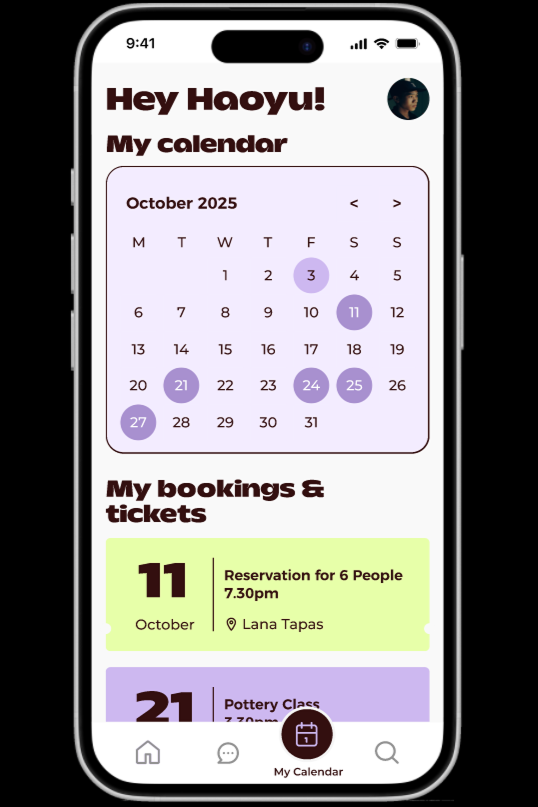
Users can buy tickets directly through the app and add to their calendar
03
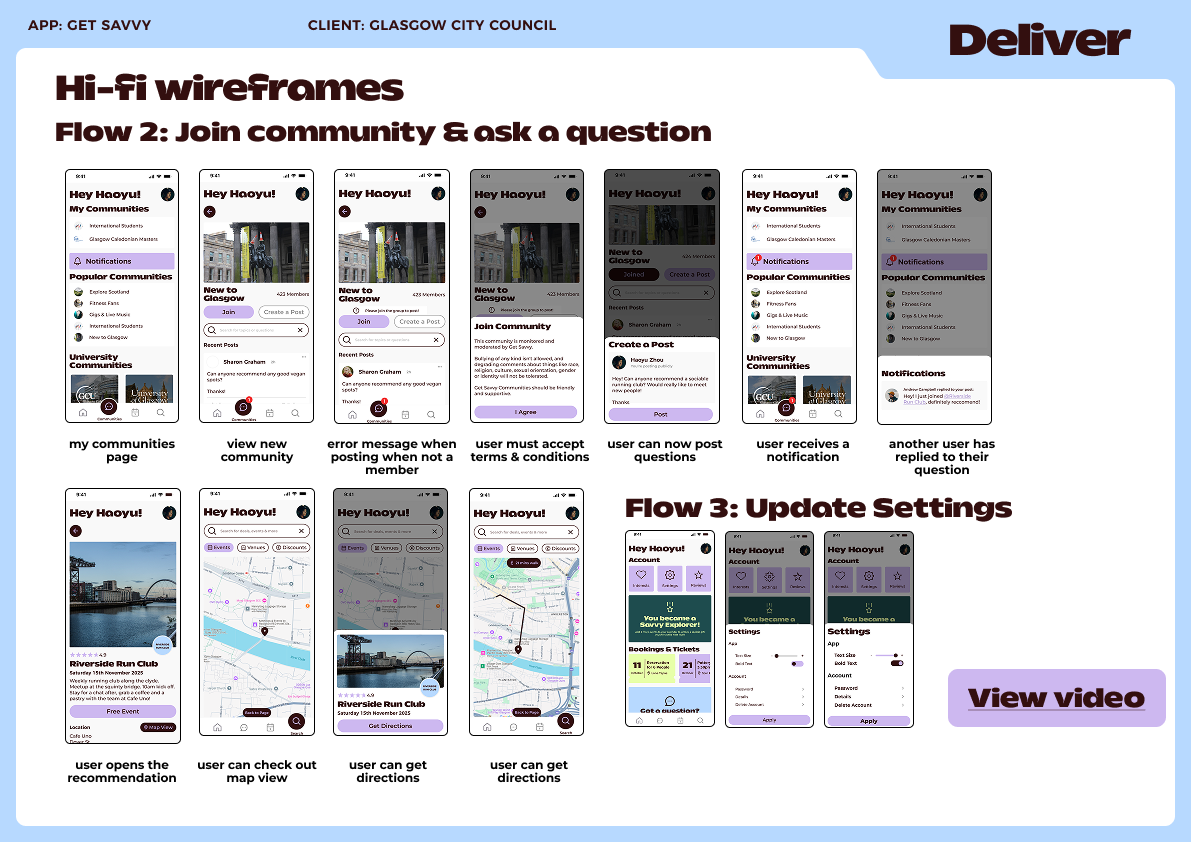
Key details of the Join a community flow:
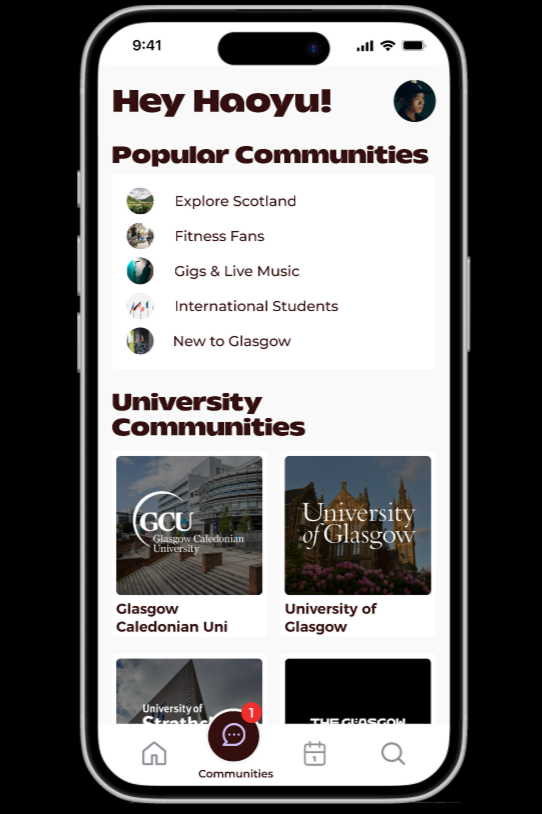
A community space where users can join groups based on interests, universities or courses
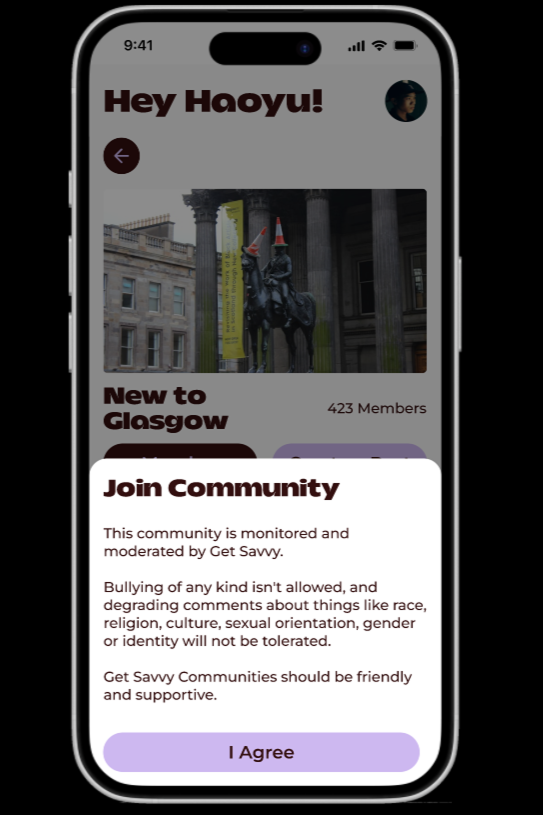
A popup requesting users agree to terms and conditions, in order to safeguard and protect students
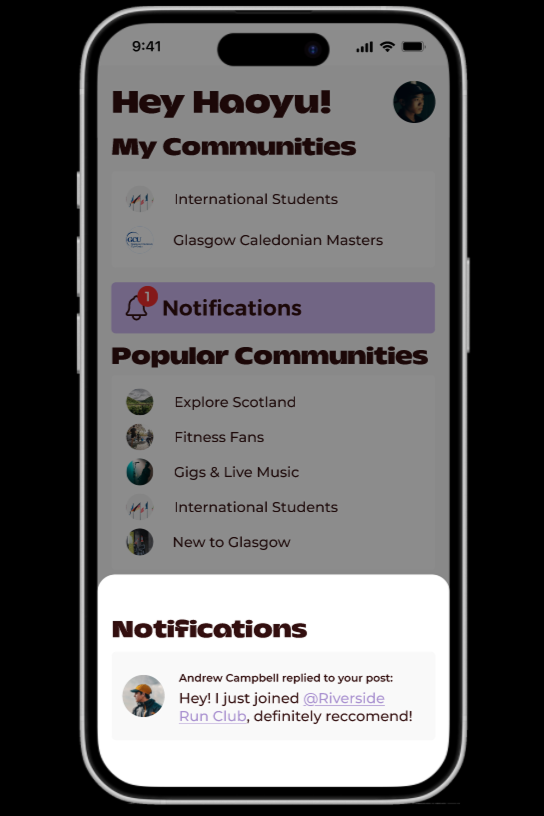
Comments, follows and likes notifications so that users can stay connected, share recommendations and chat with peers